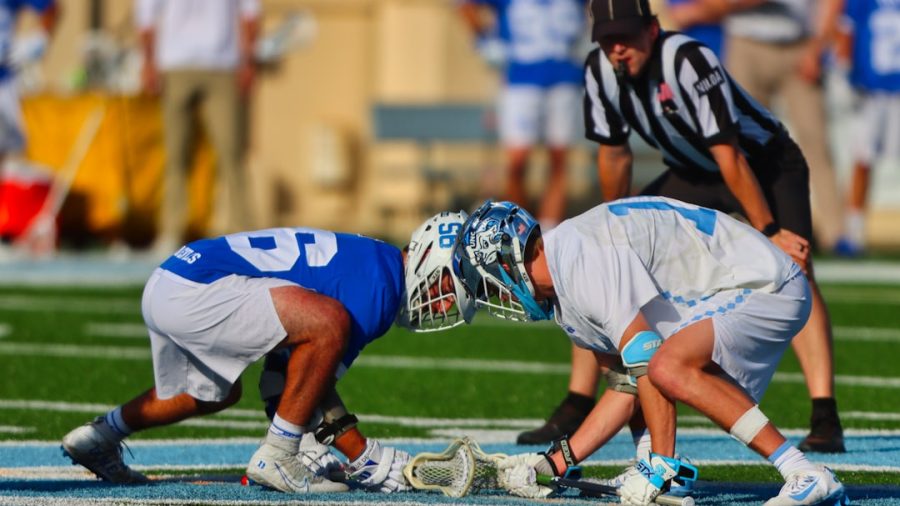
Talent is everywhere in lacrosse. The D1 rosters are packed with guys who can rip a shot from fifteen yards, dodge a slide, and throw behind-the-back passes that make highlight reels. So why do some of those players fade into the background while others become the ones coaches trust when it’s 8-8 in the fourth quarter with everything on the line?
The answer isn’t in the hands. It’s between the ears.
Performing When It Actually Matters
Practice is fake. That’s not a knock on work ethic — it’s just reality. When there’s no scoreboard, no crowd, no rival on the other end of your dodge, the stakes are manageable. The mental separation starts the moment those stakes become real.
Elite players don’t just tolerate pressure — they need it. There’s a specific kind of player who gets sharper when the game tightens, whose mechanics hold up when everyone else is tightening up and forcing shots they shouldn’t take. Coaches talk about this constantly. The ability to play your game in the fourth quarter of a championship, not some panicked version of it, is rarer than any physical skill in the sport.
What separates these players? Routine. The great ones have non-negotiables before every shot, every face-off, every defensive rep. They don’t think about the moment’s weight — they’re too busy executing the same sequence they’ve run ten thousand times. That’s not detachment. That’s preparation turning into trust.
Shot Selection When Your Body Is Lying to You
Fatigue is the great equalizer — and the great revealer. Everybody can make good decisions when they’re fresh and the game is 2-0. But when you’re gassed in the second half of a double-overtime game, your brain starts lying to you. The lanes look tighter. The goalie looks bigger. You start forcing shots because your legs are too tired to create a better look, and you convince yourself it’s a reasonable decision.
Great players recognize the lie. They’ve trained for exhaustion — not just physically, but cognitively. They’ve done film work to ingrain the reads so deeply that fatigue can’t override them. When their body says “shoot it,” their mental discipline says “does this look match what I’ve drilled?” If it doesn’t, they reset.
This is why the best offensive players in the PLL aren’t always the ones making the most spectacular plays. They’re the ones making the right play when the wrong play is the easy choice. Shot selection under fatigue is a skill, and almost nobody coaches it explicitly — which is exactly why the players who develop it on their own are worth twice what their stats show.
Communication: The Unsexy Separator
Ask any college or pro coach what they’re actually looking for in film review, and half of them will tell you: communication. Not just talking — functional, accurate, timely information moving through the defense or the offense like a system that doesn’t need a timeout to recalibrate.
The players who communicate are almost always the players who are thinking ahead. You can’t tell your slide partner where to be if you don’t already know where the ball is going. Communication isn’t a personality trait — it’s a symptom of mental processing speed and team awareness. High IQ players talk. Low IQ players react.
On the offensive end, it’s the same story. The attackman who’s calling out the defense’s positioning, setting up dodges for teammates before the play develops, is operating two steps ahead. Those players make everyone around them better without the stat sheet ever capturing why.
What Elite Coaches Are Actually Looking For
At the highest level of recruiting and roster building, the mental checklist matters as much as the physical one. Not in a vague “high character” press release way — in a specific, observable way.
Coaches want players who compete differently after a mistake. How fast does a player reset after giving up a goal? Does a turnover turn into two? Does a bad call visibly derail their next three possessions? Mental resilience isn’t about pretending bad things didn’t happen — it’s about the speed of the recovery. The best players in the country have short memories for failure and long memories for process.
They also want players who can be coached under stress. A lot of players respond fine to instruction when things are going well. The test is whether a player can absorb a hard correction at halftime down by three goals and execute it in the second half. That requires ego management most twenty-year-olds haven’t been forced to develop yet.
Finally, they want players who make themselves and the people around them harder to play against — not just through physical tools but through psychological consistency. The opponent who never stops competing, never shows you frustration, never gives you the emotional edge you’re looking for? That player is already beating you before the ball drops.
The Work Nobody Sees
Mental training in lacrosse is still under-invested relative to the physical side. Most programs aren’t putting in the hours on visualization, pressure simulation, or cognitive load training that the elite programs have been running for years. That gap is closing — but slowly.
The players who figure this out early, who treat the mental side of the game as a skill that requires deliberate reps, are building an edge that doesn’t show up in any stat and doesn’t get recruited off a highlight tape. It shows up in the fourth quarter of the games that matter most.
That’s the difference between good and great. It always has been.