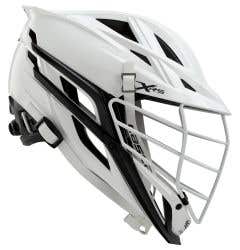
Defensive lacrosse heads are not offensive heads with a paint job. They exist to withstand checks, clear balls under pressure, and hold a pocket that won’t warp after a mid-field collision. If you’re shopping for a d-pole setup and you’re looking at the same heads your attackman uses, you’re doing it wrong.
Here’s what makes a head defensive: stiff sidewall construction that doesn’t flex on contact, a narrow face for pocket durability and legal compliance, and a throat design that locks onto a long-pole shaft without torque. NCAA rules require all heads to be at least 6 inches wide at the widest point — that’s not the design spec that separates d-heads from offensive heads. The difference is rigidity and how the head performs on impact, not on a precision feed.
How We Ranked These
We looked at sidewall stiffness, pocket legality for defensive play, shaft compatibility on long poles, weight-to-durability ratio, and real-world performance in contact situations. Price mattered — a $200 head that plays like a $120 head is not a deal. A $90 head that holds up through a full season is. These are ranked for varsity-level and serious club players. Youth players and casual rec-leaguers have a shorter list below.
1. STX Stallion 900
The Stallion 900 is the standard defensive heads are measured against. The dual-density sidewall construction makes this thing a brick — in the best possible way. It absorbs checks without flexing, the throat is engineered for long-pole balance, and the stringing channels give you room to run a legitimate defensive pocket without fighting the head. Street price around $90–$110. This is the head most high school and college d-poles are going to end up on, and for good reason.
2. Maverik Kinetik
Maverik doesn’t get enough credit in the defensive conversation and the Kinetik is why that needs to change. The reinforced plastic compound runs stiffer than most competitors at the same price point ($85–$105), and the narrow face shape holds its geometry game after game. The offset design is subtle but real — it helps with cradling on the clear without sacrificing the rigidity you need at the defensive end. This is a legitimate top-shelf d-head that plays like it costs more than it does.
3. Epoch Hawk
The Hawk is where material science shows up. Epoch uses their carbon-blended composite in the sidewall construction, which means you get a head that’s light for its stiffness class and holds dimensional shape better than traditional plastic heads under temperature stress. At $120–$140 it’s a step up in price, but the weight savings on a long pole is real and the pocket holds its shape better over a full season. For players who snap sticks regularly, this is worth the investment.
4. Warrior Regulator 2
The Regulator 2 earns its spot by being indestructible. The sidewall geometry is specifically engineered for defensive positioning — you can check hard and the head doesn’t torque on you. It runs stiff even in cold weather, which matters if you’re playing fall ball or early spring. The pocket depth channels are laid out for midfield defensive play rather than attack setups. Pricing is in the $95–$115 range. It’s heavier than the Epoch and not as refined as the Stallion, but if longevity is your top priority, this head outlasts everything else on this list.
5. Nike Vapor Elite
Nike’s defensive offering is technically sound but gets marked down for value. The Vapor Elite plays well — narrow face shape, solid rigidity, good shaft lock — but at $130+ you’re paying the swoosh tax more than you’re paying for superior performance. It’s not better than the Stallion or the Kinetik. It’s different, and for players who are already in the Nike ecosystem and want the matching gear aesthetic, it makes sense. For everyone else, the money buys you more at positions 1 and 2 on this list.
6. Brine Clutch Elite
The Clutch Elite is the best budget option on this list and earns a spot for that alone. At $60–$80, it plays stiff enough for high school JV and club-level defense, holds a legal pocket, and doesn’t fall apart in a half season. It’s not a college-level head — the sidewall flex under heavy contact is noticeable next to the Stallion or the Kinetik. But for younger players getting serious about the position, or for a backup stick, this is the right call. Don’t buy it for your starting long pole if you’re playing at a high level.
The Bottom Line
Varsity and college d-poles: start with the STX Stallion 900 or the Maverik Kinetik. Both are in the same price band, both play at a high level, and both will hold up through a full season of contact. If weight is your priority and you have the budget, step up to the Epoch Hawk. If you break heads regularly, the Warrior Regulator 2 is your head.
Youth and JV players: the Brine Clutch Elite gets you a real defensive head at a price that makes sense. Upgrade when you’re ready to compete at the next level.
Skip the Nike unless you’re already locked into the brand. The performance doesn’t justify the premium over the Stallion or Kinetik.
One more thing: whatever head you pick, string it for defense. A pocket that’s strung for an attackman on a defensive head is still a defensive liability. Get it set up right or find someone who can do it for you.