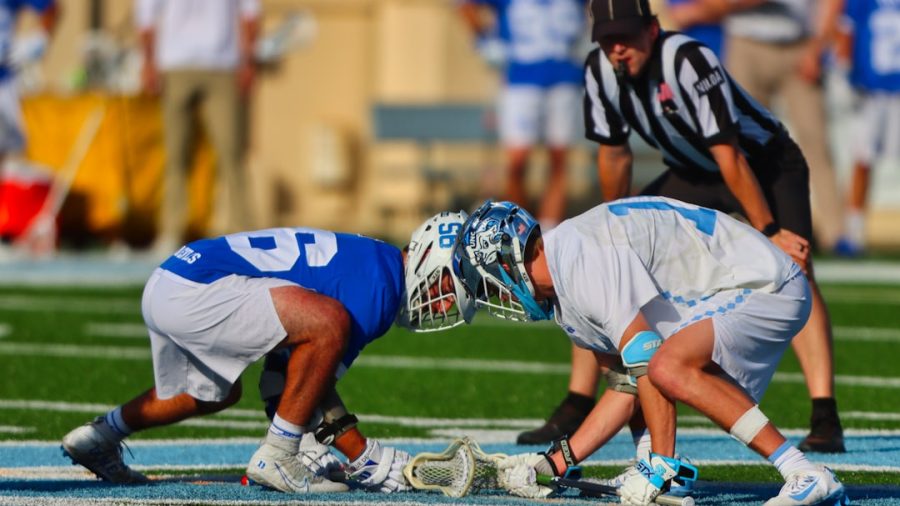
There are two kinds of programs in Division I lacrosse: ones that win because of talent, and ones that win because of systems. The talent-only programs look great in March and disappear by May. The systems programs are still playing in May — and they’re doing it year after year, roster turnover be damned. Understanding the difference is understanding what actually separates elite coaching from just being lucky enough to recruit a generational attackman.
Defense-First: The Foundation That Doesn’t Lie
The most durable programs in D1 lacrosse are built on defense. Not because offense doesn’t matter — obviously it does — but because defense is coachable in a way that transcends personnel. You can scheme and drill your way to a top-ten defense. You cannot scheme and drill your way to a Lyle Thompson. Offensive talent is talent-dependent. Defensive systems are philosophy-dependent.
Maryland under John Tillman has leaned into this reality. The Terps have consistently fielded units that hold opponents under ten goals at a rate most programs envy. Tillman’s system demands every midfielder knows his defensive assignment as well as his offensive role — there’s no freelancing, no star treatment on the defensive end. The result is a program that doesn’t collapse when its top scorer goes down or moves on.
Syracuse under Gary Gait is reconstructing around the same principle. The Orange’s identity under the legendary former player is still taking shape, but the early returns show a staff that believes defense creates offense — turnovers forced in the defensive zone translate directly to fast-break opportunities. It’s the same philosophy that powered Jim Boeheim’s basketball dynasty in the Carrier Dome, just applied to a different sport. Suffocating defense becomes easy transition offense.
The Offense-First Programs: High Risk, High Reward
Then there’s the other school of thought: if you score more than your opponent, you win. Simple math. Programs built around offensive identity accept that they’ll occasionally get into track meets they don’t want to be in, and they’ve made peace with it.
Virginia under Lars Tiffany is the clearest example of a program that went from stiff and system-bound to explosively offensive. The Cavaliers under Tiffany run a motion offense that asks every attackman and midfielder to be a creator, not just a finisher. The system has turned UVA into one of the sport’s must-watch programs and produced a national championship. It also produces games where the Hoos occasionally give up thirteen and have to score fourteen to win. That’s the trade.
Duke under John Danowski perfected the offense-first philosophy before anyone else in the ACC. Danowski’s teams look like they’re improvising but they’re actually running incredibly precise spacing and movement principles. The genius of Duke’s offensive system is that it breeds creativity within structure — players have freedom, but that freedom operates within defined zones and reads. It’s why Duke has developed more All-Americans than almost any program in the country. The system amplifies talent rather than constraining it.
Recruiting Philosophy: You Have to Build What You Can Recruit
Here’s what most coaching analysis gets wrong: the best system in the world is useless if you can’t recruit to it. The sustainable programs are built around a coaching philosophy that matches a recruiting pipeline the staff can actually dominate.
Notre Dame under Kevin Corrigan understood this better than anyone for twenty years. The Irish couldn’t out-recruit the Ivy League for the kind of skill players that make an offense-first system hum. So Corrigan built a blue-collar, physical, defensive-minded program that consistently overachieved relative to talent level. He recruited to his philosophy and built a system that maximized what his roster could actually do.
Penn State under Jeff Tambroni has taken the same approach in the Big Ten. The Nittany Lions recruit hard-nosed, two-way players who fit a defined system. Tambroni doesn’t try to out-recruit Maryland or Virginia for the splash prospects. He finds the right fits for what he runs, and the program consistently competes for conference titles because of it. That’s sustainable. Going to war every year for five-star recruits who might not fit your culture is not.
What Actually Makes a System Last
The programs that endure — the ones that show up in the final four in different decades with completely different rosters — have one thing in common: the system is bigger than any player on it. When a star attackman declares for the PLL, the program doesn’t go into rebuilding mode. They reload.
That requires three things coaching staffs rarely talk about publicly. First, the system has to be teachable. If it only works when your best player is a genius, it’s not a system — it’s a stage for one performer. Second, the culture has to produce buy-in from players who know they’re serving the program, not the other way around. Third, the recruiting pitch has to be honest: this is what we run, this is where you fit, and this is what success looks like here specifically.
Maryland, Duke, Virginia, and Notre Dame have all figured this out in different ways. The programs currently struggling in the top conferences — and you know who you are — haven’t. They’re still chasing roster talent without a coherent system to put it in, hoping a great recruiting class covers the philosophical gaps.
It won’t. It never does. The programs that build systems last. The ones that build rosters are one bad recruiting cycle from mediocrity.