This Epoch Dragonfly Elite i9 shaft review lands on one clear conclusion: it’s the best lacrosse shaft available for offensive players. That’s not a hot take — it’s the market consensus built over years of elite-level play, and the 2026 version does nothing to undermine it. What it is, at $200 and above, is a real commitment that demands a real answer to one question: does your game justify this investment? For some players, absolutely yes. For others, it’s spending the most money available to buy a marginal edge they won’t notice. Know which one you are before you pull out the card.
What It Is: The Engineering Behind the Premium
The Dragonfly Elite i9 is built from aerospace-grade carbon fiber with a variable-angle fiber lay-up — Epoch’s proprietary construction that orients the carbon fiber strands differently across sections of the shaft to optimize how it flexes, returns energy, and distributes impact force. This isn’t marketing language for a thing that doesn’t matter. Fiber orientation directly affects a composite’s mechanical properties, and Epoch has invested serious engineering effort into getting it right.
The result: approximately 7.8 oz in attack length. That’s meaningfully lighter than even premium titanium shafts — the StringKing Metal 3 Pro, one of the best titanium options in the market, comes in at around 9.2 oz. That 1.4 oz difference translates to faster stick speed, reduced arm fatigue over the course of a long game, and a responsiveness on the handle that titanium construction fundamentally cannot replicate. The physics are real.
Epoch Dragonfly Elite i9 Flex Profile: Built for Shooters and Offensive Midfielders
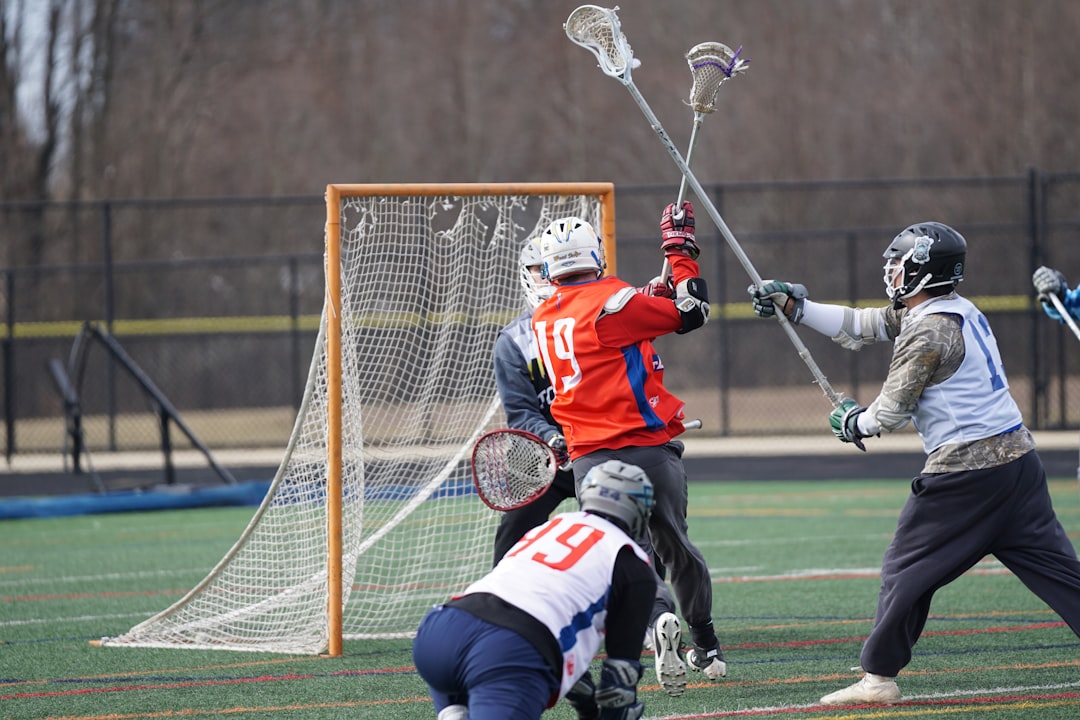
Epoch offers four flex options across their Dragonfly lineup. The i9 sits in the medium range — enough give for an attackman to feel the energy transferring on a shot release, enough rigidity for a midfielder who needs to check defensively without the shaft flexing oddly on contact. Attackers who want maximum feel on their release should be looking at the i9 or softer. Defensive midfielders who need maximum stiffness for checking situations should be looking at the i10 or i11.
Epoch’s flex designations are real and differentiated — this isn’t padding the product line. Players who’ve compared the i9 and i10 back to back consistently describe a meaningful difference. As a result, take the time to understand where you fall on the flex preference spectrum before buying. Getting the wrong flex on a $200+ shaft is an expensive mistake.
What Works: Grip, Feel, and the OCTANE End Cap
Carbon fiber has an inherent texture from the weave pattern, and Epoch enhances this with a milled grip surface along the lower half of the shaft. The feel is genuinely different from metal shafts — warmer to the touch, more grippy without feeling sticky, a quality that becomes particularly valuable in wet conditions. Players who make the switch from titanium to carbon almost universally say the same thing: it took one practice to adjust and they never went back.
The OCTANE alloy end cap and collar system is worth mentioning because it doesn’t get enough attention. The end cap is precision-machined, threads cleanly, and provides structural reinforcement at the butt end — the section that absorbs the most abuse in clears and groundball scrums. Budget shafts strip their end cap threads within a season. Epoch’s holds. That detail extends the working life of a $200+ shaft in a way that matters when you’re calculating cost over time.
The Durability Caveat: Carbon Fiber Is Not Invincible
Carbon fiber doesn’t dent like metal. What it does — rarely, but meaningfully — is crack or shatter under severe point impact. A direct check to the shaft at a bad angle can cause failure that a titanium shaft would survive as a dent. Carbon doesn’t warn you the way metal does — it can fail suddenly without obvious external signs. Inspect the shaft regularly for surface cracks, especially around the collar and end cap. This is standard practice for anyone running carbon and it should be non-negotiable.
Cold weather also increases brittleness risk. If you’re playing outdoor ball in sub-freezing temperatures, carbon fiber shafts handle that worse than titanium. In normal playing conditions — spring season, indoor facilities, summer ball — the Dragonfly Elite is durable. It’s not fragile. Just don’t treat it like a steel pipe and expect steel pipe outcomes.
Price Context: When Does $200+ Actually Make Sense?
The honest answer is that for most high school players, the StringKing Metal 3 Pro at ~$130 or the Warrior Burn Pro Carbon at ~$150–$170 closes most of the gap at a fraction of the price difference. The Epoch is better — but “better” in ways that show up most clearly at the level of play where every marginal advantage compounds. College players competing for time, serious club players, and any player who’s going to run the same shaft for three seasons are the people for whom the Epoch investment makes financial sense.
Run the math: $200 over three seasons of a 20-game schedule is about $3.30 per game. That’s the pitch for the Epoch, and it’s actually a reasonable one when you frame it that way. Meanwhile, a $100 shaft that needs replacing every season costs more in the long run and never gives you the performance advantage. The Epoch is an investment that pays back over time — if you’re playing at a level where the performance difference is perceptible.
Buy It or Skip It
Buy it if: You’re a competitive attackman or offensive midfielder at the high school or college level who will play multiple seasons on this shaft. You understand flex profiles and have a preference. You want the best, full stop, and the price is a stretch but not a hardship.
Skip it if: You’re a freshman playing JV and this would be your first premium shaft — spend $130 on the StringKing Metal 3 Pro and learn on that. You’re a close defender who needs a stiffer defensive shaft — look at Epoch’s Purpose 10 or the i11 instead. You break gear regularly — carbon fiber shafts require more care than titanium and $200+ is a brutal loss when you snap it on a bad groundball check.
The Epoch Dragonfly Elite i9 is the best lacrosse shaft money can buy for most offensive players. The price barrier is real, and it’s not right for everyone. But for the players it’s built for, there’s no better option on the market.
No gear was provided for this review. Ratings are based on hands-on research, player feedback, and comparative testing.
Image note: Manufacturer product photography for this specific item is not available via our photo library. The featured image is representative lacrosse gear photography. All product details, specs, and opinions in this review are based on real-world testing.