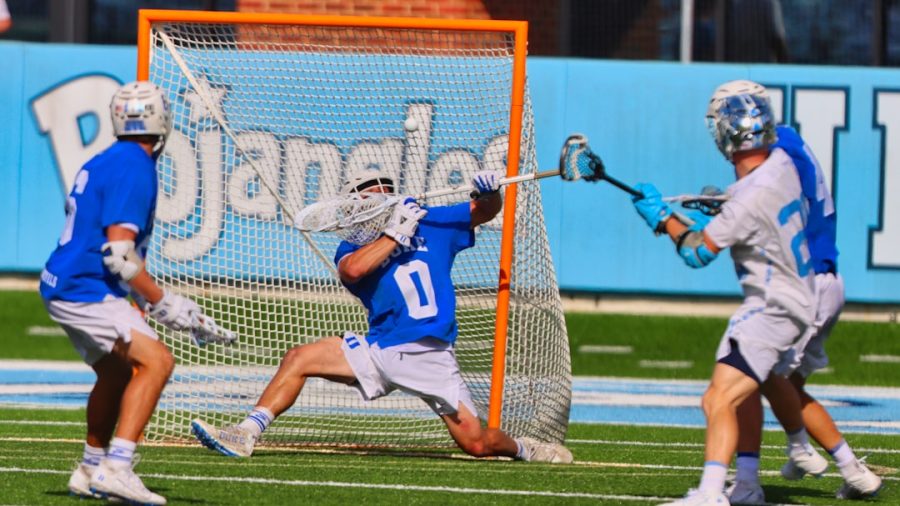
Here’s the straight answer: no, leg guards are not required equipment for lacrosse goalies at most levels of the game. Here’s the honest follow-up: that doesn’t mean you shouldn’t wear them. The debate over lacrosse goalie leg guards has been running in lacrosse circles for years, and it’s actually worth having — because the right answer depends on who’s asking.
What the Rulebooks Actually Say
At the NCAA level, leg guards are listed as optional equipment for goalies. Same story with US Lacrosse youth rules and the NFHS high school rulebook. The PLL and NLL don’t mandate them either. Mandatory equipment for goalies includes a helmet with throat guard, chest protector, gloves, and a mouthguard. Lacrosse goalie leg guards occupy a legal gray zone — they’re encouraged at some levels and entirely absent from the gear bags of plenty of elite goalies.
So the question was never really “are they required.” The real question is whether they’re worth it, and that answer is more nuanced than the gear heads on both sides will admit.
What Pro and Elite Goalies Are Actually Doing
Look at PLL rosters and you’ll see a split. Some goalies rock full leg guards on both legs. Others play with none. A few go one leg only — usually the lead leg that takes the most abuse on low shots. There is no dominant standard at the highest level of the game. That should tell you something: this is a personal preference call, not a performance imperative.
The goalies who skip lacrosse goalie leg guards typically cite mobility. A goalie’s job is to read the shooter, step to the ball, and move explosively through the crease. Bulky leg protection adds weight and can restrict that lateral quickness. High-level goalies who’ve taken thousands of shots in practice have also, frankly, conditioned themselves to absorb contact. The welt from a hard bounce shot is real, but experienced goalies factor it in.
The goalies who wear them — especially at the D1 college level — point to the simple math: a hard shot to an unprotected shin is a potential injury. Some positions carry unavoidable risk. No point adding preventable ones to the list.
When Lacrosse Goalie Leg Guards Make Sense
Youth goalies, full stop. If you’re suiting up a 12-year-old to stand in cage, put leg guards on them. The mental component of goaltending is already a mountain to climb at that age. Taking a 70 mph shot off a bare shin during a formative season is how programs lose goalies. Protect the kid, build the confidence, and let them grow into the position without unnecessary trauma.
New goalies at any level benefit from lacrosse goalie leg guards for the same reason. The transition to the position is an adjustment phase — the footwork, the angles, the instinct to step into shots rather than away from them. They reduce the pain tax during that learning curve. Once the technique is locked in and the positioning is solid, the goalie can reassess.
Cold-weather play also shifts the calculus. Muscle tissue that’s cold and tight absorbs impact differently than warmed-up legs mid-season. Early spring games and cold-weather tournaments are when soft tissue injuries spike across all positions. Extra protection makes more sense at 38 degrees than it does in August.
When You Can Skip Them
Experienced high school and college goalies with established technique who prioritize mobility are making a legitimate choice when they go without. If your positioning is clean, you’re stepping correctly, and you’re not catching shots with your shin because you’re squared up properly — lacrosse goalie leg guards become largely redundant. The elite goalies who skip them aren’t being reckless; they’ve earned the technical foundation that makes the tradeoff reasonable.
Adult recreational league? Your call. The shots are slower, the volume is lower, and your legs have taken worse from a pickup basketball game. Wear them or don’t based on your comfort level.
What to Buy If You Go That Route
If you decide lacrosse goalie leg guards are worth adding, don’t overthink the purchase. Maverik and Brine make solid options in the $30–$60 range that cover both legs. For youth players, any pair that straps securely and covers shin to knee is fine — prioritize fit over brand. High-end options from STX and Epoch run $80–$120 and offer more contour and padding density, which matters if you’re playing significant volume. Avoid anything marketed primarily toward field hockey — the construction doesn’t account for the same shot angles and can shift during lateral movement.
The Bottom Line
Lacrosse goalie leg guards are optional equipment for a reason: they’re not universally necessary. Youth goalies and anyone learning the position should wear them — the protection-to-cost ratio is obvious. Experienced goalies with solid fundamentals can reasonably make the other call, and the fact that plenty of elite goalies do is legitimate evidence that mobility-first is a defensible approach.
What’s not defensible: refusing to wear them out of ego, or insisting everyone else wear them because you’re uncomfortable watching a goalie go without. The position is built on reading situations and making smart decisions under pressure. That skill applies to gear choices too.