If you’re researching women’s lacrosse goalie equipment, you already know the position is undersupported — by coaches, by gear companies, and by equipment guides written by people who’ve never stood in a crease. This one’s different. We’ll tell you exactly what gear you need and what you can skip. We’ll also cover what separates a high school setup from a college-ready kit.
Women’s Lacrosse Goalie Equipment: Required vs. Optional
US Lacrosse mandates specific protective equipment for women’s goalies. You don’t get to pick and choose here — show up without the required gear and you’re not playing. The required list includes: a helmet with NOCSAE certification, a throat protector, chest protector, gloves, mouthguard, and a goalkeeper stick. That’s the floor. Everything else is a choice.
The optional gear — leg pads, padded shorts, shin guards, elbow pads — matters more than people let on. Moreover, women’s lacrosse goalies face 90+ mph shots at close range with less padding than a lacrosse bag. The “optional” label is a rules technicality, not a medical recommendation.
How We Ranked These
We evaluated women’s lacrosse goalie equipment based on three things: protection relative to price, fit/mobility trade-offs, and real-world feedback from high school and college goalies. We didn’t take manufacturer claims at face value. If the chest protector looks good on paper but restricts arm movement, that’s in the review.
Helmets
1. Cascade LX Women’s Goalie Helmet — $250–$280
The benchmark for women’s goalies at the high school and collegiate level. Excellent visibility with the extended cage, good ventilation, and NOCSAE certified. This is the helmet you see on the majority of D1 benches because it earns that position — not because of marketing spend. If you’re serious about the position, start here.
2. STX Shield 300 Goalie Helmet — $180–$220
A legitimate step down in price without a significant step down in protection. The fit runs slightly narrower than the Cascade, so try it on before committing. For high school goalies not ready to spend $270, this is the honest recommendation — not a consolation prize.
3. Warrior Evo Goalie Helmet — $200–$240
Solid protection, adequate visibility, and the fit works well for athletes with a rounder head shape. Not the most popular option but worth considering if the Cascade and STX fits don’t work for you. Position-specific fit matters more than brand loyalty.
Chest Protectors
1. Maverik Rome RX3 Women’s Chest Protector — $120–$150
Full coverage without the stiffness that makes some chest protectors feel like you’re wearing a stop sign. The articulated design actually lets you move your arms through a full save motion, which sounds like it should be standard but isn’t. Best pick for high school through college goalies who want real protection without sacrificing mobility.
2. STX Eclipse 2 Chest Protector — $100–$130
Well-priced, good coverage, and the padding distribution is honest about where shots actually land. Slightly less articulation than the Maverik, but the price gap makes it a reasonable call for younger players still growing into the position. Replace it when they stop growing.
3. Brine Triumph Chest Protector — $80–$110
The budget option that doesn’t feel like a budget option. Coverage is adequate for recreational and JV-level play. College goalies and serious varsity players will want more. But if you’re just starting in the crease or buying gear for a young goalkeeper, this won’t leave you exposed.
Goalkeeper Gloves
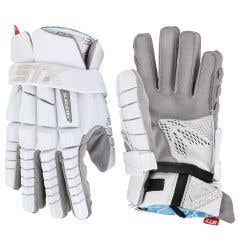
1. STX Surgeon 700 Goalie Gloves — $60–$80
The palm is reinforced where it needs to be without making the gloves so stiff you lose feel on clears. That balance is harder to get right than it sounds. These have been a reliable option for high school and college goalies for good reason.
2. Maverik Max Goalie Gloves — $50–$70
Excellent wrist protection and a comfortable fit across a range of hand sizes. Got wider hands and most gloves feel tight at the knuckles? Try these before you assume goalkeeping gloves just don’t fit you. They probably do.
3. Warrior Burn Goalie Gloves — $45–$65
Lower price point, solid construction, and adequate protection for younger goalies. The padding thins out faster than the STX or Maverik options after a full season of heavy use, so factor in replacement cost if you’re doing the math.
Goalkeeper Sticks
1. STX Eclipse 2 Goalie Stick — $130–$170 (complete)
The Eclipse 2 mesh technology is the reason this stick shows up in so many D1 programs. Excellent pocket hold, good feel for clears, and it handles all weather without the pocket blowing out in wet conditions. This is the stick to beat at the college level.
2. Maverik Optik 2 Goalie Head + Shaft — $100–$140
Strong competition to the Eclipse at a slightly lower price. The scoop is well-designed for ground balls — important because goalies who can’t field ground balls are goalies who give up extra possessions. High school goalies should be comfortable with this choice.
3. Warrior Evo QX Goalie Stick — $90–$120
Not as refined as the STX or Maverik options at the top. Still, at this price point it’s a legitimate setup for JV and lower-level varsity goalies who don’t need to be spending $150+ on a stick yet.
Throat Protectors
Don’t overthink this piece of women’s lacrosse goalie equipment. The Cascade and STX helmet-specific throat guards that attach to their respective helmets work well and stay in place. Universal hang-on throat guards from brands like Shock Doctor ($15–$25) are acceptable but tend to shift during play. Buy the one made for your helmet if the option exists.
The “Optional” Gear You Should Actually Buy
Leg pads are the most skipped piece of women’s lacrosse goalie equipment and the one most goalies regret skipping. STX Eclipse leg guards ($60–$90) and Maverik Rome leg pads ($50–$80) both offer enough protection to matter on low saves without restricting movement significantly. If you’re playing varsity or higher, these belong in your bag.
Padded shorts — specifically something like the McDavid Hex padded compression shorts ($30–$50) — protect the hip and thigh on dive saves. Goalies who dive find out quickly why these exist. Get them before you need them.
High School vs. College Goalies: What Changes
When it comes to women’s lacrosse goalie equipment, high school goalies should prioritize protection over optimization. The Cascade or STX helmet, a real chest protector, quality gloves, and a reliable stick covers the position correctly. Don’t underbuy on protection because you’re not sure how long you’ll stick with the position — take a shot to the sternum in a cheap chest protector and you’ll know immediately.
College goalies need to optimize across all categories simultaneously. The Eclipse 2 stick, Cascade LX helmet, Maverik Rome chest protector, and leg pads are the serious setup. College goalies who scrimp on gear are giving away saves — the budget option does not perform equally when the stakes are higher and the shots are harder.
The Bottom Line
High school goalies new to the position: STX Shield 300 helmet, STX Eclipse 2 chest protector, STX Surgeon 700 gloves, Maverik Optik 2 stick. You’re protected, you’re mobile, and you’re not spending $600 to figure out if you love the position. Budget: $350–$450.
Serious varsity and college goalies need the full setup: Cascade LX helmet, Maverik Rome RX3 chest protector, STX Surgeon 700 gloves, STX Eclipse 2 stick, STX Eclipse leg guards. This is the women’s lacrosse goalie equipment you show up to a competitive program wearing without apology. Budget: $550–$700.
One more thing: buy the leg pads. Every experienced goalie who skipped them eventually bought them. Skip straight to the end of that lesson.