Nobody hands you the D3 men’s lacrosse championship. You earn it the hard way. It takes a brutal bracket and a roster built on players the big programs overlooked. A coaching staff that turns an eight-month grind into one championship week makes all the difference. This isn’t a consolation prize for the guys who couldn’t play D1. This is lacrosse in its most unfiltered form, and the programs that win it have earned every bit of that trophy.
The Field Is Deeper Than You Think
There are over 200 programs in D3 men’s lacrosse. The NCAA tournament takes 18 of them — four automatic bids from conferences that have earned them and 14 at-large selections. Ultimately, those spots come down to RPI, strength of schedule, and the committee doing its job. That means elite programs from the NESCAC, Centennial, Liberty League, and ODAC are fighting for the same spots every spring, and the margins are razor-thin.
Wesleyan, Tufts, Salisbury, Stevenson, RIT — these aren’t household names outside the D3 world, but inside it, they hit different. Salisbury has built a dynasty that would make any D1 athletic director envious. The Sea Gulls have more national championships than most programs have tournament appearances. They recruit smart, develop harder, and play a style of lacrosse that punishes teams who aren’t fundamentally sound from whistle to whistle.
What the Tournament Format Actually Demands
One and done. That’s the entire bracket from the first round forward. Moreover, there’s no double-elimination cushion, no soft landing after a bad performance. If you lose, you go home, and your season is over. That reality reshapes how coaches build their programs and how they construct their rosters.
In practice, the path to a championship runs through four games in roughly two weeks. That means depth isn’t a luxury — it’s a requirement. For example, a star attackman who carries the offense in the regular season becomes a liability in May if he can’t shake elite defensive schemes. The teams that win D3 championships have weapons everywhere. They don’t let opponents shut down one player and walk away with a win.
Hosting matters too. The top seeds earn home games in early rounds, and in D3, home field is a genuine advantage. Additionally, travel budgets are tight, fan support is real and loud, and playing on a familiar surface matters when the margins are this small. Programs that build strong enough records to host quarterfinals have already cleared a significant hurdle before the bracket even starts.
What It Takes to Win the D3 Men’s Lacrosse Championship
Talk to coaches who’ve been there and they’ll tell you the same things: transition, faceoffs, and goaltending. Not in that order necessarily, but all three of them, every game.
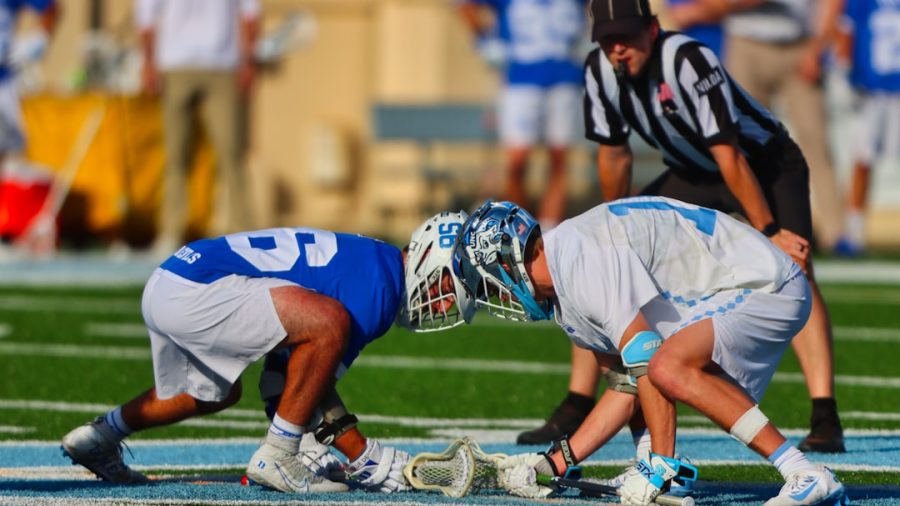
Faceoffs at the D3 level are criminally undervalued by casual observers. So a dominant FOGO controls possession, which controls tempo, which controls the entire tone of the game. Programs that have cracked the D3 men’s lacrosse championship code typically have a faceoff specialist who wins 55 percent or better. They also need a midfield unit that can actually do something with those possessions.
Meanwhile, goaltending separates good programs from great ones. In a tournament setting, opponents have two weeks to film and prep, so offense becomes harder to execute. The teams still standing in the semifinals got there because their keeper made the saves he was supposed to make in the quarterfinals. As a result, one game-changing performance between the pipes often decides a tight contest. It’s the difference between a final four run and a plane ride home.
Transition is the multiplier. D3 defenses are well-coached and disciplined, so settled six-on-six offense is a grind. The teams that can push tempo off clears, create numbers advantages, and score before defenses get organized? They unlock another gear that patient, half-field teams simply don’t have.
The Programs Built for This Moment
The perennial contenders share a common thread: coaching staffs that have been in place long enough to build genuine culture, not just talent. Salisbury under the program’s long-term architects has it. Wesleyan has it. Furthermore, Tufts has demonstrated it across multiple championship runs. These aren’t programs that stumble into a good year — they manufacture them systematically.
What makes D3 different from the top of the sport isn’t ability. It’s the absence of the infrastructure that insulates D1 programs from adversity. D3 players carry full academic loads, don’t have the same training resources, and often work jobs during the offseason. However, the ones who make it to championship week do it on pure love of the game. That level of buy-in is something most D1 rosters never fully achieve.
That’s why the D3 championship hits differently for the people who played in it. When Salisbury or Tufts or Stevenson hoists that trophy, it’s not the end of a professional development pipeline. Instead, it’s the culmination of four years of outworking the limitations of the level and proving that elite lacrosse doesn’t have a zip code requirement.
Finally, the road to the D3 men’s lacrosse championship is longer, harder, and less glamorous than the path to College Park. It’s also, for anyone paying attention, just as worth watching.