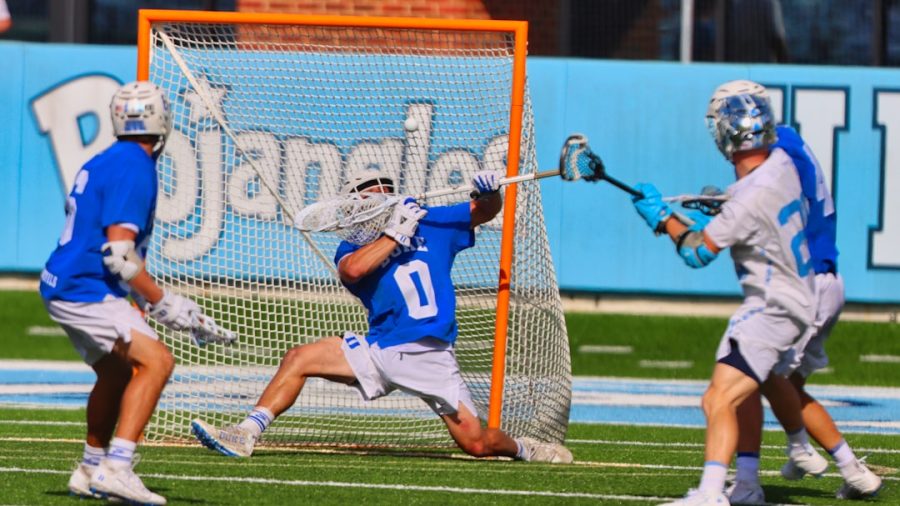
Goalie heads are the most misunderstood piece of equipment in lacrosse. Most players — and even some coaches — think wider automatically means better. It doesn’t. A head that’s 12 inches wide and strung like a hammock is going to give up rebounds like a backboard. What matters is throat width, pocket placement, sidewall stiffness, and how the whole package holds up when a D1 midfielder uncorks a 90 mph shot from eight yards out. We tested and ranked the best goalie heads available in 2026. Here’s what actually stops shots.
How We Ranked These
We evaluated goalie heads on throat width (NFHS minimum is 10 inches, NCAA allows up to 12 inches at the widest point), sidewall rigidity under repeated shot impact, shooting string compatibility, pocket depth range, and durability across a full season of use. Price was factored in relative to performance — a $90 head that plays like a $140 head gets credit for that. We’re not ranking aesthetics. We’re ranking heads that make saves.
1. STX Eclipse 3
The Eclipse line has been the gold standard for college goalies for years, and the Eclipse 3 doesn’t change what works. At 11 inches at the throat and built with STX’s reinforced sidewall construction, this head absorbs impact without flexing into useless shapes mid-game. It strings predictably, holds a mid-to-deep pocket clean, and the shooting string channels are wide enough to run a full set of leathers or shooters without killing release. Price runs $85–$100. This is the head for serious high school and college goalies who want proven performance over novelty.
2. Maverik Rome RSX
Rome RSX is the sleeper pick that more college goalies are quietly switching to. The throat width hits the 11-inch mark with a slightly more flared lower sidewall than the Eclipse, which gives it a bigger visual presence in cage — and that matters when you’re selling through footwork and positioning. Pocket depth is adjustable across a wider range than most heads in this tier, which means it plays well for goalies who throw outlet passes and need to balance catch-and-release speed with shot-stopping depth. Runs $90–$110. Built for the goalie who’s also a distributor, not just a wall.
3. Warrior Nemesis 3
Warrior doesn’t make bad goalie heads. They make goalie heads that require a skilled stringer to unlock. The Nemesis 3 at 10.5 inches throat width is slightly narrower than the top two, but the sidewall geometry — specifically the way the rails angle toward the scoop — creates a natural ball-funneling effect that compensates. Where it separates itself is durability. This head takes abuse across a full fall and spring season without warping. Street price is $75–$95, making it the best value in the top tier. Ideal for high school goalies who go through equipment faster than parents would like to admit.
4. Epoch Integra 2
Epoch’s carbon construction is legitimately different. The Integra 2 is stiffer than any traditional plastic goalie head on this list, which means near-zero flex on high-velocity shots and cleaner rebounds off the frame when you’re not making the save. The tradeoff: it strings harder. If you’re a beginner stringing your own gear, this head will punish you. If you’ve got a stringer who knows what they’re doing, the result is elite. At $120–$140, it’s the most expensive head here. This is a college-level piece of equipment. High schoolers should earn their way to it.
5. Brine King Superlight 3
Brine is living off legacy at this point, but the King Superlight 3 deserves a spot because it does one thing exceptionally well: it’s light. For younger goalies — think middle school through freshman year — the reduced weight reduces fatigue and keeps mechanics cleaner late in games. The throat width is a compliant 10.5 inches, pocket depth is easy to work with, and the price point ($60–$75) means parents aren’t having a breakdown if it gets dinged up. This is not a head for serious high school or college competition. It’s a development tool, and an honest one.
The Bottom Line
If you’re playing high school varsity or college lacrosse and you want one head that does everything right, buy the STX Eclipse 3. Full stop. If you’re a college goalie who moves the ball like a midfielder and needs pocket flexibility, the Maverik Rome RSX is worth the slight premium. If budget is the constraint and you want real durability at the high school level, the Warrior Nemesis 3 is the answer. The Epoch Integra 2 is for the goalies who’ve outgrown the rest of the market — you’ll know when you’re ready for it. And if you’re shopping for a 13-year-old who just told you they want to play goalie, get the Brine, let them fall in love with the position, and upgrade when they prove they mean it.
One universal note on regulations: know your league’s rules before you string. NCAA and NFHS have different standards for pocket depth and shooting string configurations. A beautiful custom pocket that gets you flagged at your first game isn’t a pocket — it’s a paperweight.