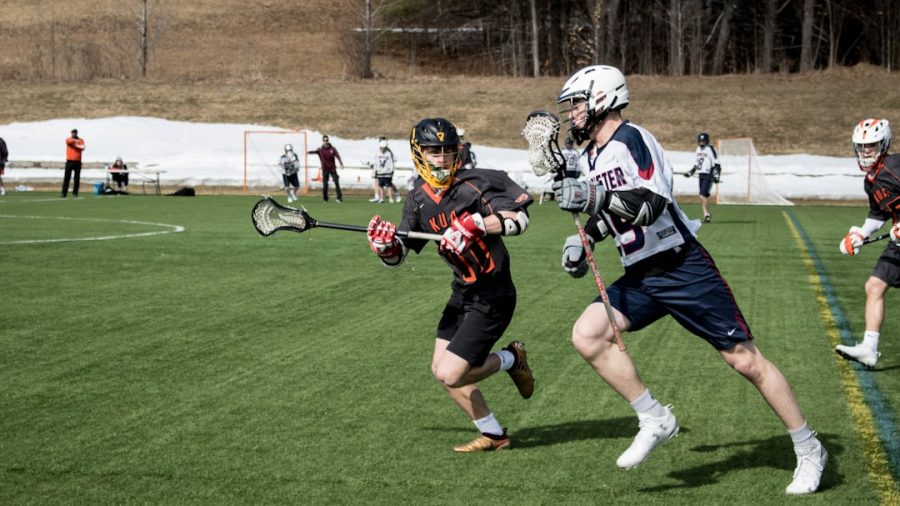
The Redwoods aren’t a bad team — and that’s actually what makes the Redwoods PLL roster problems so frustrating to watch. They have talent, they have depth at certain positions, and they show flashes of what a legitimate contender looks like. But over the past two seasons, one thing becomes impossible to ignore: this roster is built for a version of professional lacrosse that no longer exists.
The modern PLL is a transition game. It’s speed, shot quality from range, midfielders operating in space. Atlas runs it. Chrome runs it. Even Chaos has started leaning into it. Meanwhile, the Redwoods are still trying to grind teams into submission through possession and set offense — and that style is getting exposed at the highest level.
The Midfield Problem
Start with the midfield, because that’s where the structural flaw is most glaring. Specifically, the Redwoods load up on physical, two-way middies who excel at riding, winning ground balls, and playing defense-first lacrosse. In an era where midfield transition is the biggest differentiator between good teams and championship teams, that profile just doesn’t cut it anymore.
Today, PLL teams are putting midfielders in situations where they’re catching on the run at the restraining line and finishing in under three seconds. That requires a different skill set — change of direction, quick release, the ability to read a rotating defense. However, the Redwoods’ mid corps is built to control pace, not to blow the game open in transition. When you can’t hurt teams in those open-field moments, you’re handing them free points.
The Attack Doesn’t Create Enough Danger Off the Dodge
There’s a related issue at attack. Still, the Redwoods have attackmen who are excellent in structured half-field sets — patient, smart with the ball, good at moving it. That used to be the model for elite attack units. It isn’t anymore.
The teams winning PLL championships right now have attackmen who force help defense to commit on their first move. When a defense has to account for an attackman as a one-on-one scoring threat, it opens everything behind them. The Redwoods’ attack is good at executing plays. But it’s not consistently making defenses panic on isolation. That’s a scouting report every opponent has memorized by November.
The Defense Is Good — And That’s Almost the Problem
Here’s where it gets counterintuitive: the Redwoods’ defense is legitimately one of the better units in the league. Also, they’re disciplined, well-coached, and hard to score on in structured settings. The problem is they’ve used that as organizational cover for the real Redwoods PLL roster problems — they simply can’t outscore anyone.
In a low-possession, grind-it-out game, a dominant defense wins you championships. The PLL doesn’t produce those games at the rate it used to. The shot clock, pace of play, and offensive talent across the league have pushed average possessions per game up. As a result, you can play lockdown defense and still give up 13 goals. The other team is simply better equipped to capitalize when you take your foot off the gas for 90 seconds.
Building around a great defense isn’t a mistake. Committing only to that while neglecting the offensive infrastructure to match it is.
The Redwoods PLL Roster Problems and What Must Change
First, the Redwoods need a midfield overhaul that prioritizes transition creation over defensive reliability. They also need at least one attackman who can win isolation matchups and force defenses out of their comfort zone. Most importantly, they need an organizational philosophy shift — an acknowledgment that possession-based, methodical offense is a losing long-term strategy in today’s league.
None of this is easy, and none of it reflects poorly on the players. This is a roster construction and coaching philosophy problem, not a talent problem. In fact, the pieces they have would be excellent on a team built around a different identity.
But as currently constructed, the Redwoods are a playoff team playing a regular-season style in a league that’s evolved past them. Until that changes, they’re not winning anything significant — and anyone telling you otherwise hasn’t watched them closely enough.