Playing lacrosse in November isn’t a problem. Playing lacrosse in November with numb fingers that can’t feel the pocket — that’s a problem. Cold-weather gloves are the most overlooked gear decision in the sport, and most players either suffer through it with their regular setup or grab whatever generic winter glove looks the most lacrosse-adjacent. Both are wrong. Here’s what actually works.
How We Ranked These
Ranked on three factors: warmth without killing your touch, palm durability in wet conditions, and whether the wrist protection holds up when it’s 28 degrees and you take a shot off the back of the hand. Price-to-performance matters too — cold weather gear has a nasty habit of charging a premium for insulation that falls apart in one season.
The Truth About Insulation vs. Dexterity
Here’s the tradeoff nobody wants to say out loud: the warmer the glove, the worse your feel on the stick. Full stop. Bulked-up insulation between your palm and the handle means you’re throwing on feel and habit, not feedback. For most players, the sweet spot is a glove built for cold conditions with a minimal-bulk insulation layer rather than a glove stuffed with Thinsulate like a ski rental. The goal is to keep your hands functional at 30 degrees, not to pretend you’re sitting by a fire.
1. Maverik Rome RX3 Cold Weather
The Rome RX3 is the closest thing to a purpose-built cold-weather lax glove on the market. The palm runs a treated leather that stays pliable in wet cold — not stiff and useless by the third quarter — and the insulation is thin enough that your shooting strings still register through your fingers. Around $90–$110. This is a serious mid-level to advanced player’s glove. If you’re playing club or college and your hands are your livelihood on the field, this is the starting point of the conversation.
2. STX Stallion 900 with a Liner
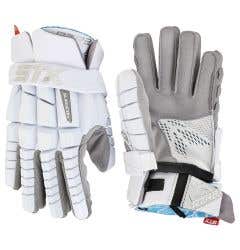
The Stallion 900 isn’t marketed as a cold-weather glove, but paired with a thin moisture-wicking glove liner, it becomes one of the best cold-weather setups available. The palm construction on the 900 is elite, and the liner eliminates the sweat-freeze cycle that kills your grip mid-game. The 900 runs $130–$150 — you’re paying for the construction, not a cold-weather marketing label. This combo is the move for advanced players who don’t want a separate cold-weather glove cluttering their bag. One caveat: liner sizing matters. Too thick and you lose dexterity entirely.
3. Warrior Evo QX2
In the $80–$100 range, the QX2 gives you a palm that doesn’t crack in the cold, reasonable backhand protection, and enough wrist mobility to take a full-extension shot without feeling like you’re fighting your own equipment. Not the warmest option on this list, but if you’re playing in the mid-30s rather than the deep freeze, it performs without compromise. Best for high school varsity and serious club players who want a cold-weather-capable glove without the premium price tag.
4. Brine King Superlight 3 + Grip Liner
The King Superlight 3 runs around $60 and is genuinely underrated for what it costs. In cold conditions, add a thin grip liner — the Under Armour ColdGear liner works well at around $15 — and you’ve built a functional cold-weather setup for under $80 total. The tradeoff is palm durability; this glove won’t survive two full cold-weather seasons at a high usage rate. It’s the right call for the high school player who plays fall ball, doesn’t want to destroy their good gloves in the mud, and needs something that actually fits in a budget.
5. EvoShield Pro-SRZ Batting Gloves (Yes, Really)
Stay with us. For players who run glove liners under their lacrosse gloves, the EvoShield batting gloves — around $30–$40 — offer grip, thin insulation, and a palm construction built for cold, wet conditions. They’re designed for ballplayers who also need to feel a bat in November. The grip pattern translates well to a lacrosse handle. This is not a primary glove recommendation; it’s a liner recommendation for players who want the warmest possible liner without adding bulk. Use it under your regular gloves, not instead of them.
On Glove Liners: Worth It or Gimmick
Liners are worth it — with conditions. A liner that adds meaningful bulk is worse than no liner because you’ve now compromised your dexterity without gaining enough warmth to justify it. The target is a liner under 2mm that wicks moisture. Wool-blend liners trap heat better than synthetics in extreme cold; synthetics dry faster if you’re sweating through. Buy thin, buy moisture-wicking, and don’t go cheap on the liner just because it’s not the “real” gear. Your hands are the last thing you want to cut corners on.
The Bottom Line
Serious club or college player in a real winter climate: Rome RX3 or STX Stallion 900 with a quality liner, no debate. High school player on a budget who needs to survive fall ball without freezing: Brine King Superlight 3 with the Under Armour ColdGear liner gets you there for under $80. The Warrior QX2 sits in the middle of the market and delivers on value without embarrassing itself in the cold.
Don’t buy a ski glove. Don’t just add hand warmers and suffer. The options exist. Use them.