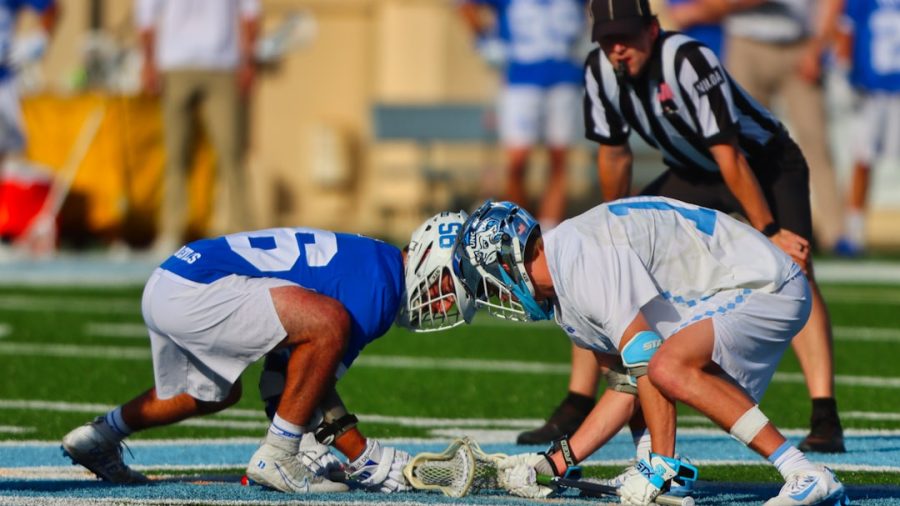
Let’s not waste time on the setup: the Northwestern women’s lacrosse dynasty is the standard. Ten national championships. Indeed, a program that has spent the better part of two decades making every other school look like they’re playing a different sport. Kelly Amonte Hiller built something at Northwestern that the sport hadn’t seen before and may never see again.
But dynasties don’t die quietly. They erode. And if you’re paying attention, there are real questions forming around whether the Wildcats can sustain this thing — not next year, but five years from now. The window is still open. However, the pressure points are already there.
Northwestern Women’s Lacrosse Dynasty: Dominance Isn’t the Question
Still, the Northwestern women’s lacrosse dynasty doesn’t just win. Additionally, they produce pro players, shape offensive systems, and set the recruiting standard against which every other program benchmarks itself. That’s not changing overnight.
But recruiting in women’s lacrosse is not the same game it was ten years ago. Programs like North Carolina, Maryland, and Boston College have resources, coaching staff depth, and recent Final Four credibility. They’re no longer settling for the players Northwestern passes on. Instead, they’re targeting the same top-ten recruits and winning some of those battles. The talent pipeline into Evanston is still elite — it’s just not as automatic as it used to be.
When you’re the dynasty, every recruit you lose gets scrutinized. Furthermore, every early exit in the tournament becomes a referendum. That pressure is real, and it compounds.
The Coaching Question Everyone’s Tiptoeing Around
Moreover, Amonte Hiller has built her legacy. She doesn’t need to prove anything to anyone. But legacy coaches at dynasty programs eventually face the same calculus: how long do you stay, and what happens when you leave?
This isn’t a knock on her. So it’s the reality of institutional dependence. The Northwestern women’s lacrosse dynasty and Kelly Amonte Hiller are so intertwined that the program’s post-Amonte Hiller identity is genuinely unclear. Who’s the next coach? What’s the succession plan? Is there one? These are questions program administrators better be taking seriously, because elite programs that ignore succession planning find out the hard way that dynasties are coach-dependent in ways championships obscure.
The programs that stay elite — Tennessee basketball under different eras, UConn women’s basketball beyond Geno — have systems, culture, and support structures that outlast any single coach. Northwestern’s culture is elite. However, whether the infrastructure matches it is harder to assess from the outside.
NIL Changes the Equation. Maybe More Than Anyone Admits.
Meanwhile, women’s lacrosse NIL is not football NIL. The money is different. But it’s not zero, and it’s growing. Recruits at the top of the class are starting to factor NIL opportunity into their decisions, and Evanston is not Miami or Chapel Hill in terms of market size, local brand partners, or built-in media exposure.
Additionally, the Northwestern women’s lacrosse dynasty has institutional prestige and an elite academic reputation that carries real weight in recruiting rooms. That’s not nothing — it’s actually a significant differentiator. But NIL introduces a variable the Wildcats haven’t had to manage before, and how the program adapts to that reality will matter.
The Bottom Line
Still, this Northwestern women’s lacrosse dynasty isn’t falling off. Not this year, probably not next year. The talent is there, the culture is real, and the program has earned the benefit of the doubt that comes with a decade of dominance.
But dynasties in college sports are fragile in ways that only become obvious in retrospect. Indeed, everyone looks unbeatable right up until they aren’t. The programs that keep winning are the ones that see the cracks before their opponents do and seal them without fanfare.
The question for this Northwestern women’s lacrosse dynasty isn’t whether they’re great. They are. The question is whether they’re building for the next decade or coasting on the last one. The answer to that question will determine whether we’re talking about a dynasty or a dynasty that used to be.
So there’s a difference. It matters. And someone inside that program needs to be thinking about it right now.