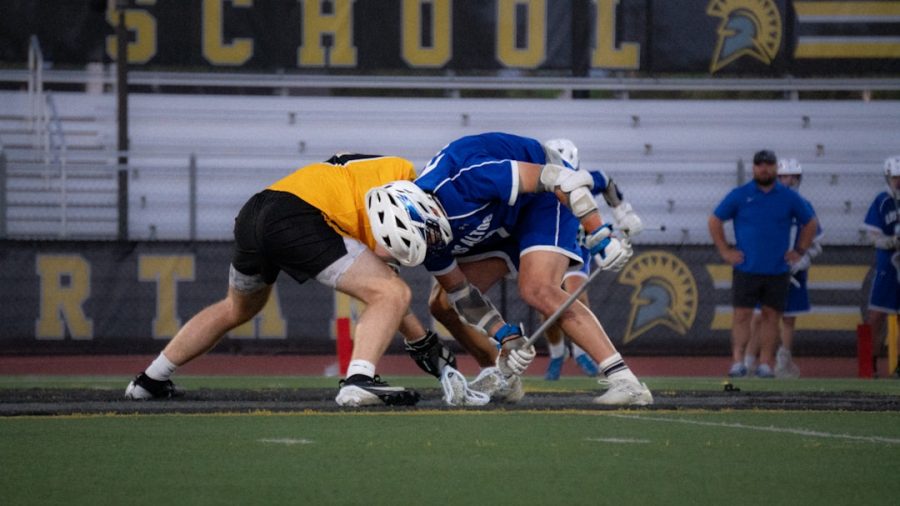
The Women’s Lacrosse League is no longer a concept. There’s a champion. There’s a runner-up with something to prove. There’s a full 2026 season with real stakes and a Lacrosse Sixes format that’s heading straight to the 2028 Los Angeles Olympics. Nobody in this league is playing for fun. Let’s break it down.
Boston Guard: Defend Everything
Charlotte North’s team won the inaugural WLL championship, 22–17 over New York in February 2025. That’s the number that matters most entering 2026. Boston Guard are defending champions, which sounds great until you realize it means every other team in this league has spent the entire offseason thinking about how to take them apart.
North is the right captain for a defending champion. She has the profile — the résumé, the confidence, the public-facing identity — to carry the target on her back without it slowing her down. The question for Boston in 2026 is whether the Championship Series run was a peak or a floor. Four-team leagues with single-elimination pressure reward execution under pressure. The Guard executed last February. Can they do it again with everyone gunning for them?
Boston is the team to beat. They know it. The rest of the league knows it. That dynamic is going to make 2026 more interesting than any neutral preview can fully capture.
New York Charging: The Hunger Is Real
Seventeen goals in a championship game and you still lose. That’s what New York walked away from in Springfield. Izzy Scane captains this team, which means the Charging have one of the most recognizable names in women’s lacrosse leading a roster that came within five goals of winning it all in the league’s first year.
Runner-up hunger in a four-team league is a legitimate edge. New York doesn’t have to rebuild anything. They don’t have to figure out what they are. They know exactly what they are — they were one better opponent away from being champions — and that clarity is dangerous. The Charging in 2026 are not the wild card. They’re the contender with a score to settle.
Scane has the scoring ability to make any game competitive, and the 2028 Olympics angle adds another layer: national team spots are earned in WLL play, and there is no player in this league with more incentive to dominate than a captain who finished second in Year 1.
Maryland Charm: Year Two Is the Real Test
Alex Aust Holman leads the Maryland Charm into a 2026 season that will tell us a lot more about this franchise than the Championship Series did. Year 1 in any new league is about survival and establishment. Year 2 is about whether you actually have something built.
Maryland should have the most favorable home atmosphere in the league. The mid-Atlantic is the center of gravity for women’s college lacrosse — the fan base here knows the game, knows the players, and has been waiting for something like the WLL for years. That’s an asset the Charm haven’t fully cashed yet. A full 2026 schedule with playoffs gives them more opportunities to build it.
Holman is the kind of captain who makes a team better without necessarily dominating every box score — which is exactly the profile you want for a program trying to establish a culture rather than just collect stats. The Charm’s 2026 trajectory depends on whether the talent around her has developed and whether the coaching staff has figured out what this team does better than everyone else.
California Palms: The West Coast Wildcard
Ally Mastroianni captains the California Palms, and the West Coast program remains the most intriguing unknown in the league. California has been building a legitimate lacrosse pipeline for years — the club scene out west has produced elite talent that flows into the top college programs. If that talent concentrates into a California-branded WLL roster, the Palms have the ceiling to be the most watchable team in the league.
The practical challenge is what it’s always been for a California team in a league whose competitive infrastructure is built in the East: travel, roster assembly, and building a local audience from scratch in a market where lacrosse is growing but not yet rooted. None of those are insurmountable, but none of them are free either.
In 2026, California is the team that could either vault into championship contention or expose the gap between potential and execution. Mastroianni is the player to watch as the barometer for which direction it goes.
The 2028 Accelerant
Here’s the factor that makes the 2026 WLL season more than just a year-two survival test: lacrosse is in the 2028 Los Angeles Olympics, and the format is Lacrosse Sixes — the exact format the WLL plays. Every game in 2026 is national team film. Every strong WLL season builds a player’s case for an Olympic roster. Every championship run puts a player’s name in front of the coaches and selectors who will make those decisions.
This isn’t abstract. The players in this league know the Olympic clock is running. That’s a competitive intensity multiplier that no preview can fully quantify, but it’s real, and it’s going to make the 2026 WLL season burn hotter than a typical Year 2 would.
The Pick: New York Charging Win in 2026
Runner-up hunger, Izzy Scane with a full year of WLL Sixes reps, and a team that already proved it could score 17 in a championship game. New York is the pick.
Defending champions in small leagues tend to struggle in Year 2 when the field has had a full offseason to study them. Boston is the better story, but New York is the better bet. The Charging get the rematch they’ve been thinking about since Springfield, and this time they close it out.
Boston Guard will make it a fight. Maryland Charm will surprise people. California Palms will produce the most highlight-reel moments of any team in the league. But when the 2026 WLL season ends, the trophy goes to New York.
Four teams, one trophy, zero guarantees — and a lane straight to the 2028 Olympics for anyone willing to take it. The WLL’s second season isn’t a proof-of-concept anymore. It’s a championship race. Act accordingly.