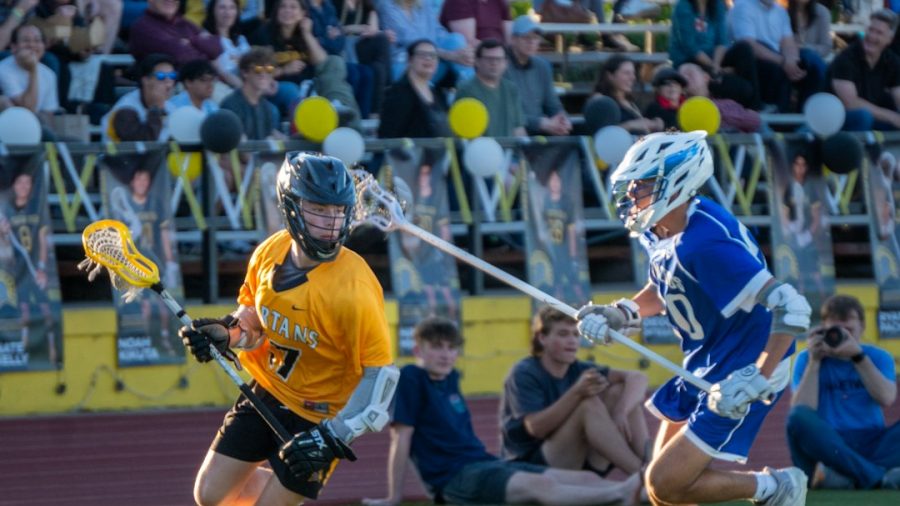
Connor Fields won the 2024-25 NLL Most Valuable Player award. The Rochester Knighthawks went 10-8 and lost in the quarterfinals to Vancouver. Fields still walked away with the trophy — and the numbers explain exactly why.
46 goals. 76 assists. 122 points across 18 games. He led all NLL forwards with 148 loose ball recoveries and put up 252 shots — the most in the league for the second straight year. He set new Knighthawks franchise records for power-play assists (22) and power-play points (27). In a year where Dhane Smith broke his own single-season assists record and finished with 134 points, Fields still got the MVP vote. That is not an accident.
The Case For Fields
The MVP award is supposed to go to the most valuable player in the league — not the most valuable player on the best team. Those are different things, and the voters got it right.
Smith was spectacular. 134 points, 102 assists, an NLL single-season assists record he broke himself. He did it on a team with Josh Byrne (also 134 points), Ian MacKay, and a supporting cast built for championships. Remove Smith from that roster and you still have a top-three NLL team. That is not a knock on Smith — it is a structural fact about how well-built the Bandits are.
Now remove Fields from Rochester. The Knighthawks do not make the playoffs. They probably finish bottom-five. His 122 points on a 10-8 team that barely snuck into the postseason is a more dominant individual performance than 134 points on a team that could have won without him. That is the MVP argument in one sentence.
The Counterargument (And Why It Loses)
The counterargument for Smith is emotionally satisfying: broken record, championship, 134 points. But MVPs are not champion bonuses — if they were, you would just hand the award to the best player on the winning team every year and skip the debate. Fields put up numbers that would have earned MVP consideration on any roster in the league. The 252 shots is the number that matters most: generating offense at that rate, repeatedly, against set defenses and double teams, for a full 18-game season. The 148 loose ball recoveries say he does the dirty work too. This is a complete player having a complete season. The voters correctly separated individual offensive production (Smith, Offensive POY) from overall value (Fields, MVP).
The Rest of the Award Landscape
Frank Scigliano of Saskatchewan earned Goaltender of the Year (.795 save percentage, 9.40 GAA). Matt Hossack won Defensive POY — 34 caused turnovers, 26 blocked shots for a Rush team that went to the Cup Final. Owen Grant won Transition POY for Vancouver (103 loose ball recoveries, 28 caused turnovers). Dyson Williams of the Albany FireWolves took Rookie of the Year. Ian MacKay earned Finals MVP for Buffalo. Derek Keenan won GM of the Year in Saskatchewan — he built the runner-up and has the franchise pointed in the right direction.
What It Means Going Forward
Fields is in the prime of a Hall of Fame career in Rochester on a team that has not yet built around him properly. If the Knighthawks figure that out, they are not a fringe playoff team — they are a contender. For Smith, the narrative continues: records, championships, and an MVP that went elsewhere in a year he had one of the best statistical seasons in league history. The 2024-25 MVP race was one of the best arguments the NLL has produced in years. Fields won. He deserved it.