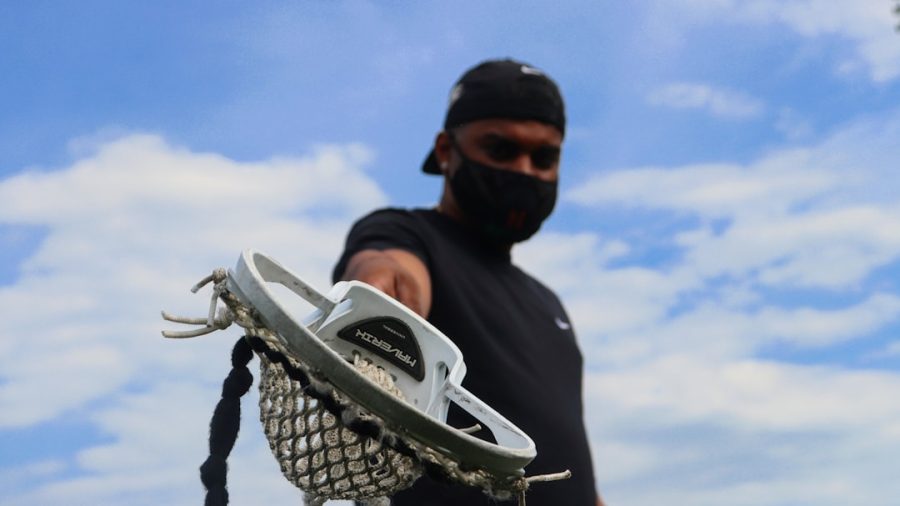
Your weather lacrosse pocket doesn’t fail on its own. Humidity, rain, and temperature swings are the silent killers of mesh. Most players don’t do a damn thing about it until it’s too late. Here’s what’s actually happening to your pocket and how to stop letting Mother Nature embarrass you on the field.
What Weather Does to Your Lacrosse Pocket
Mesh is woven nylon or a nylon blend. Nylon absorbs water. When it absorbs water, it stretches. When it dries out in heat, it contracts. Do that cycle enough times and your pocket bags out into a hammock — or it tightens up until the ball rolls out on every catch. Neither outcome is useful.
Rain is the obvious villain, but humidity is the one that sneaks up on you. You live in Florida or the mid-Atlantic. You practice four nights a week. Your stick never fully dries between sessions. That slow, repeated moisture exposure does more damage over a season than one rainstorm ever could.
Cold is its own problem. Mesh gets stiff in low temperatures — below 40 degrees, traditional mesh starts to lose its channel. The ball sits differently than it did during fall ball. If you’ve ever thrown a crisp spiral in October and wondered why your accuracy fell off a cliff in February, mesh stiffness is your answer.
What to Do With a Waterlogged Pocket
First: don’t throw a soaking wet pocket in your bag and leave it overnight. That’s how you wake up to a pocket that belongs on a fishing net, not a lacrosse head. After a wet practice or game, take the head off the shaft and let it air dry horizontally with the pocket facing down. Gravity holds the pocket in its natural shape while the water drips out.
If your pocket is already stretched from repeated wet sessions, you’ve got two options. The quick fix: put a ball in the pocket and tie it in with a rubber band or hair tie. Let it dry overnight. This forces the mesh to hold its shape as it contracts back down. It’s not perfect, but it works in a pinch before a game.
The better fix: re-break the pocket deliberately. Throw against a rebounder or a wall for 20-30 minutes after it dries. The mesh needs to re-conform to your throwing motion — not to whatever shape the drying process left it in. A waterlogged pocket that air-dried without use is still going to feel off until you’ve thrown with it.
For players using traditional leather — increasingly rare but not extinct — wet leather needs conditioning treatment after it dries, not before. Let it dry naturally, then work leather conditioner in. Water and leather either come out fine or ruin the pocket forever. The drying phase determines which.
Between-Season Maintenance
Off-season storage is where most recreational and club players completely drop the ball. Literally. If you’re storing your stick in a garage that swings from 95 degrees in August to 20 degrees in January, your mesh is getting temperature-cycled into oblivion. Store it somewhere with reasonable temperature consistency — a closet, a bedroom, anywhere stable.
Before you put the stick away for any extended period, do three things. Clean the mesh with mild soap and water to remove sweat and dirt. Let it fully dry — we’re talking 24-48 hours, not an hour on the porch. Then store it with a ball in the pocket to maintain the channel shape. Takes five minutes. Saves you a full re-string in March.
Mid-season, if you’re playing through a wet spring schedule, wax-based mesh treatments can help. Products like ECD’s StringKing mesh or Jimalax’s waxed options resist water uptake better than standard mesh. They’re not waterproof — nothing is — but the difference in how fast they sag under wet conditions is real. Still running a dry-woven mesh from two years ago? That’s a gear problem you can solve for under $15.
What Level Player Needs to Care About This
Honestly? Everyone above beginner level. If you’re still learning to catch and throw, pocket consistency isn’t your bottleneck. However, the moment you’re making cuts and expecting a weather lacrosse pocket to deliver on a split-second release, maintenance becomes part of the job. That applies to middle school varsity and up, club players, and anyone in college. Elite players re-string obsessively for a reason. The game is fast enough that a pocket 10% off costs you goals.
The Bottom Line
Weather doesn’t care about your pocket. You have to. A ball-in-pocket drying routine, proper off-season storage, and attention to what your mesh is doing in the rain costs nothing and takes almost no time. Stop blaming your shot and start looking at what six months of humidity did to your weather lacrosse pocket.