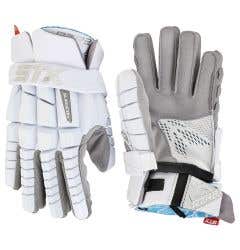
New lacrosse gloves straight out of the bag feel like cardboard wrapped around your hands. Stiff palms, no flex in the fingers, zero feel on the shaft. If you take them into a game like that, you’re fighting your own equipment. Here’s how to break them in fast — without turning a $150 pair of gloves into trash.
Why the Palm Is Everything
The palm of your glove is your connection to the stick. When it’s stiff, your grip has to compensate — you squeeze harder, you fatigue faster, and your touch goes out the window. A broken-in palm moves with your hand, flexes when you cradle, and gives you tactile feedback on catches and checks. That’s what you’re chasing. Everything else is cosmetic.
Most modern gloves use a synthetic or mesh palm that softens with heat, moisture, and repeated flexion. The process isn’t magic — it’s just accelerating what a full season of use would do on its own.
The Water Method (Fastest, Highest Risk)
Dunk your gloves in lukewarm water — not hot, not a full soak, just enough to dampen the palm and fingers through. Squeeze out the excess, then immediately put them on and work the material. Make a fist, flex the fingers, run through your grip mechanics for 10–15 minutes. Do this over a ball or shaft if you have one handy.
The risk: if you oversoak leather-palmed gloves or leave them wet too long, you can crack or shrink the material. Synthetic palms handle moisture better. Whatever you’re working with, don’t let them air dry in a clenched shape — dry them flat or on a glove form.
Done right, one session of the water method gets you most of the way there. Done wrong, you’ve got warped, stiff gloves and no recourse.
Conditioning the Palm
For leather palms specifically, a light application of leather conditioner does real work. Saddle soap or a product like Leather Honey applied to the palm and fingers softens the material without saturating it. Rub it in, let it absorb for 15–20 minutes, then flex the glove repeatedly with your hand inside.
For synthetic palms, conditioner doesn’t do much. Focus on heat and flex instead — a few minutes in a warm (not hot) car interior or a brief session with a hair dryer on low, followed immediately by manual flexing, achieves the same effect.
Don’t condition the backhand padding. You’re softening the grip surface, not the whole glove. The protective foam needs to stay dense.
Game-Time Shortcuts
If you’re starting a game or practice in new gloves and didn’t prep them ahead of time, here’s what actually helps in the moment:
Warm your hands before putting the gloves on. Warm hands transfer heat faster and the palm softens more quickly once you start moving. If it’s cold out, this matters even more — cold stiffens the material significantly.
Take a hundred ground balls in warmups before the whistle blows. Repetitive motion with resistance breaks down the palm faster than anything passive. You want the material stressed and flexed, not just sitting on your hands.
Some players pour a small amount of warm water directly into the palm right before they go on — risky in a game setting, but in a practice or warmup scenario it’s legitimately effective.
What Not to Do
Don’t microwave your gloves. Don’t put them in a dryer. Don’t soak them in hot water. These methods circulate online and they all have a reasonable chance of damaging the adhesive holding the palm together, warping the foam, or shrinking the fit. The marginal time savings aren’t worth it.
Don’t force-stretch the fingers by over-bending them backward. You can delaminate the seams or compromise the padding structure. Work within the natural range of motion — repeated flex, not aggressive pulls.
Realistic Timeline
With the water method plus conditioning, you’re looking at 1–2 sessions before the gloves feel significantly better. Full break-in where the palm moves completely naturally takes 3–5 practices of actual game-speed use. There’s no shortcut that eliminates that entirely — you’re compressing the timeline, not skipping it.
If a pair of gloves still feels wrong after five practices, the issue might be fit, not break-in. A glove that’s too long in the fingers or too narrow in the palm won’t break in to fit properly — it’ll just become a softened version of the wrong fit.
The Bottom Line
Break in your gloves before game day. The water method is the fastest legitimate approach. Conditioning helps leather palms specifically. Warmth plus repetitive flexion works for everything else. Do the work in warmups, not during a game when it actually matters. And if the gloves still don’t feel right after a week of use, the problem isn’t the break-in process — it’s the glove.