The Verdict Up Front
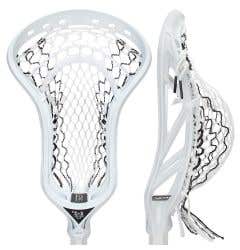
ECD ICE mesh does what almost no other mesh on the market bothers to do: it stays consistent when the temperature drops below 40°F. Cold spring season turning your pocket into a brick every time it hits freezing? This is the mesh you’ve been waiting for.
Who This Is For
ECD ICE mesh is built for serious players — high school varsity through collegiate level — who play significant time in cold, wet conditions. If you’re a midfielder or attackman who demands hold consistency from snap to snap regardless of weather, this is your product. Defensemen who rely on a flatter pocket can run ICE too, but the benefits are most obvious for guys running a mid-to-high pocket with some channel. Budget-wise, you’re looking at the $20–$25 range for the mesh alone. That puts it at the premium end of the mesh market, but well within reach for anyone buying their own gear.
What ECD ICE Mesh Does Well
The core promise — cold-weather consistency — is real. Traditional mesh, even quality traditional mesh, stiffens up in cold temps. Pockets tighten, throws go high, and by the second quarter of a 32-degree March game your feel is completely different than warmups. ECD ICE mesh uses a treated synthetic construction that resists that stiffening. The pocket you strung on Tuesday holds its shape on Saturday morning when it’s 35 and drizzling.
The throw-to-throw consistency in cold conditions is genuinely impressive. Spiral throws stay on line. The mesh doesn’t fight you when you’re trying to release off the hip on a skip pass. That’s not a small thing — it’s the difference between trusting your stick and second-guessing it at the worst moments.
Water resistance is another real win. ICE sheds moisture better than standard mesh, which means a wet ball doesn’t kill your hold the way it does with conventional stringing. The mesh weight stays manageable even after a full half in the rain, which is more than you can say for most traditional options.
Stringing ECD ICE mesh is straightforward — it behaves like normal semi-hard mesh. No weird tension issues, no fighting the material. Experienced stringers will have no surprises. Even intermediate DIY stringers can work with it without drama.
What Doesn’t Work
ECD ICE mesh is built for cold. In warm-weather conditions — 65°F and above — it offers no advantage over good standard mesh. It can also feel slightly stiffer than a broken-in traditional setup. If you’re a warm-climate player or someone who primarily competes in summer leagues, this is not your mesh. You’re paying a premium for a feature you won’t use.
Break-in time is real. ECD ICE mesh doesn’t come out of the bag game-ready. Plan for a proper break-in period — wall ball sessions, weathering — before you trust it in a game. That’s standard for quality mesh, but it’s worth flagging for anyone expecting plug-and-play.
Color selection is limited. ECD offers ICE in a handful of options, but if you’re trying to match a very specific colorway for a custom build, you may be stuck. Not a performance issue, but worth knowing.
Price vs. Value
At $20–$25, ICE mesh costs more than standard semi-hard options that run $10–$15. That’s a real premium — roughly double in some cases. The question is whether cold-weather performance justifies the cost, and the answer depends entirely on where and when you play.
For a northeast or midwest player grinding a full spring season, the value calculation is easy. March through May means plenty of games in the 30s and 40s. One ruined game because your pocket turned to cardboard costs you more than the $10 difference in mesh price. Buy the ICE mesh, string it right, and stop thinking about it.
For a Florida or California player who sees cold weather twice a year? Pass. There are better options for your conditions at a lower price point.
Bottom Line
ECD ICE mesh is the best cold-weather mesh on the market. It does exactly what it advertises. The performance benefit in sub-40°F conditions is tangible and consistent, and the price premium is justified for any player dealing with real spring weather. String it early in the season, break it in properly, and it will hold up through every cold-weather game you play. If you’re in a warm climate, look elsewhere — but if spring lacrosse in your region means frozen fingers and 35-degree game days, stop settling for mesh that was never designed for those conditions.