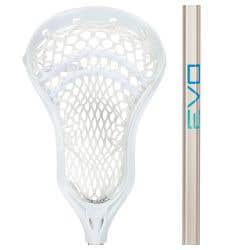
You walk into a lacrosse shop or pull up an online retailer and you see it: a complete stick, $80, ready to go. Next to it, a bare head for $90. The math looks insane — until you actually do it. Here’s the honest breakdown of what you’re really paying for and who should be buying what.
How We Broke This Down
We looked at current retail pricing across major lacrosse retailers for complete sticks, standalone heads, shafts, and professional stringing. We split the analysis into three player levels — beginner/youth, high school, and college/serious club — because the right answer is completely different depending on where you’re at. No sponsored takes. No affiliate math tricks. Just what things actually cost and what you actually get.
The Complete Stick Case
Let’s start with what complete sticks are actually doing right. The big brands — Maverik, STX, Warrior, Lacrosse Unlimited house brands — are selling complete sticks in the $50–$130 range. At that price point, you’re getting a matched head and shaft combo with a factory string job. The stringing is usually mediocre. Not terrible, just built to a price point. The shaft is mid-tier aluminum or entry-level composite. The head is fine.
For a 10-year-old in their first season of box lacrosse or a kid just picking up the sport, this is the obvious call. You don’t know if they’re going to stick with it (no pun intended), the gear will get beaten to death in a bag for six months, and the performance delta between a $90 complete stick and a $250 custom setup is completely wasted on a beginner. Buy the complete stick. Don’t overthink it.
The other time complete sticks make sense: backup sticks. Every serious player should have one. A $100 complete stick sitting in your bag for when your game setup breaks mid-tournament isn’t an embarrassment — it’s smart. Nobody’s judging your backup.
The Custom Build Case
Now here’s where it gets real. The moment you’re playing competitive high school lacrosse or higher, the complete stick math starts working against you — but not in the way most people assume.
A quality standalone head runs $60–$140. A solid shaft — say an ECD Carbon Pro or a Maverik Hyperlite — is another $80–$150. Professional stringing at a shop or from a skilled stringer? Add $20–$50. Total for a genuinely good custom build: $160–$340. That sounds brutal compared to an $80 complete stick until you understand what you’re actually buying.
Custom stringing alone is worth the price of admission. A pro pocket tuned to how you shoot — high, mid, low, whip preference — is not a minor upgrade. It’s the difference between a stick that fights you and one that feels like an extension of your hand. Factory string jobs are built neutral because they don’t know who’s buying it. Your custom pocket knows exactly who’s throwing with it.
You’re also buying modularity. Shaft breaks? Replace just the shaft. Head cracks? Swap just the head. With a complete stick, one broken component means you’re back at the store buying another complete stick. Over two or three seasons at the high school level, that adds up fast.
The Real Numbers by Level
Youth / Beginner (Under 13)
Buy the complete stick. $50–$100 range. Warrior Evo, STX Stallion, Maverik Charger — any of these work. The kid needs to learn to catch and throw, not obsess over pocket depth. Spend the savings on wall ball sessions.
Competitive High School
This is where you split. If you’re JV and still figuring it out, a $100–$130 complete stick with a restring ($20–$30 at any decent shop) is a completely legitimate setup. If you’re varsity, starting, and playing summer ball — build custom. You will notice the difference. Budget $180–$250 and do it right.
College / Serious Club
Custom, full stop. At this level, your stick is a precision tool. You know what you want, you know what you need, and the performance gap between a factory complete and a properly built custom is too significant to ignore. Budget $250–$350 and get it strung by someone who actually knows what they’re doing.
The Bottom Line
Complete sticks aren’t a rip-off — they’re a different product for a different customer. If you’re buying for a beginner, a backup, or a casual player, complete sticks are excellent value. The moment you’re playing at a competitive level and actually developing your game, building custom pays dividends that show up on the field. The math isn’t just about the upfront cost. It’s about what the gear does for your game over time.
Stop asking which is cheaper. Start asking which one helps you play better — and buy accordingly.