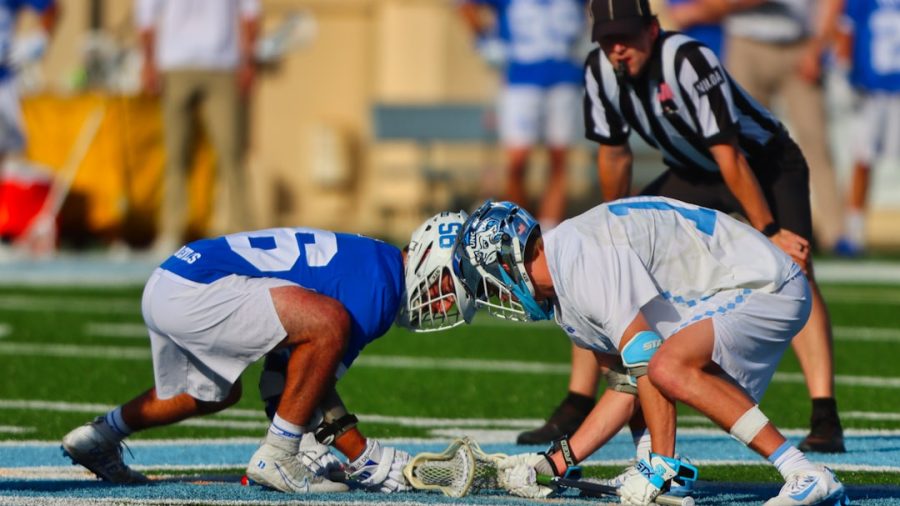
Clearing is the least glamorous part of lacrosse. Nobody buys a ticket to watch a goalie throw an outlet pass. Nobody posts highlight reels of a midfielder winning a ground ball in the defensive half and getting it up the field clean. But if you want to understand why certain D1 programs win consistently and others stall out in the first round every March, start here — in the clearing game.
Clearing percentage is one of the most predictive stats in college lacrosse, and it’s chronically undervalued by casual fans and overvalued by bad coaching staffs who think “we clear at 80%” is an excuse when their offense is getting three shots per game. Context matters. But the baseline truth is simple: teams that can’t clear reliably are running their offense on borrowed time.
What a Real Clearing System Looks Like
The best D1 clearing units aren’t improvising. They have structure — defined lanes, defined responsibilities, and a goalie who understands that his first job after a save is to be a quarterback, not a ball carrier looking for glory.
The most common effective system runs a 3-3 break alignment after a save: three defenders spread wide and high in the defensive half, three midfielders staggered up the sidelines with a “ride breaker” at center field around the restraining line. The goalie reads the press, hits the open long-stick, and the unit advances in waves. Simple. Boring. Devastatingly effective when everyone does their job.
What separates elite clearing programs from the middle of the pack isn’t scheme complexity — it’s execution discipline. Syracuse, Notre Dame, and Maryland don’t run magic concepts. They rep their clears thousands of times in practice so that when a Chesapeake ride tries to bait them into a turnover, every player on the field already knows the answer.
The Tendencies That Get Exploited
The most predictable clearing mistake at the D1 level is the “goalie hero” syndrome. A goalie makes a big save, adrenaline is up, and instead of hitting the open long-stick defender on the wing, he tries to push the ball himself into traffic. That’s how you give up a goal two seconds after making a great stop. Coaches who don’t discipline this are coaching chaos.
The second most exploitable tendency is passive wide attackmen. Most D1 teams leave their attackmen at the offensive end during a clear attempt — their job is to occupy the opposing defense and provide an outlet if the ball gets there. Teams that let their attack drift, ball-watch, or crowd the center are effectively playing 9-on-10 against a press ride. Smart riding units identify this and shade their ride toward the crowded side, cutting off the natural reset.
The third problem is static clearing routes. If your midfielders run the same lanes on every clear attempt — and at the D1 level, most teams develop tendencies within a half — good riding programs will game-plan those lanes and jump them. Virginia, Denver, and Penn State run multiple clearing looks precisely to prevent opponents from committing to one press scheme. Teams that run one look all game are handing their opponent a blueprint.
Clearing Percentage as a Predictor
The data backs this up. Look at the final four field in any recent NCAA tournament and you’ll find clearing percentages clustered in the 85-90% range. Drop below 80% at the D1 level and you are, functionally, gifting your opponent extra possessions in every game. Over a season, that compounds into the 10-15 goal differential swings that determine seeding.
More importantly, clearing percentage under pressure — specifically in the second half of close games — is where programs reveal their true character. Any team can clear when they’re up four goals and the ride is passive. The question is what happens at 8-7 in the fourth quarter when the riding unit is desperate and your goalie just made the save of the season and is staring down a full-press.
Programs that have invested in their clearing system practice those scenarios explicitly. Programs that treat clearing as an afterthought find out the hard way what it costs.
What to Watch For This Season
As we get deeper into the D1 season, the clearing game becomes a natural separator. Teams with elite attackers can survive mediocre clearing in the regular season by outscoring their problems. Come tournament time — single elimination, higher-quality opponents running disciplined rides — the teams that haven’t fixed their clears pay for it quickly.
Pay attention to turnovers logged on clears specifically. Three or more clearing turnovers in a game is almost always fatal. One or two is survivable if your offense is elite. Zero means your program has done the work.
Clearing doesn’t end up on ESPN. The players who execute it don’t get poster deals. But the teams that win championships in May? They cleared the ball in April when nobody was watching.