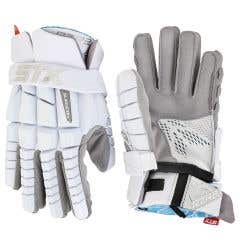
If you’re searching for the best lacrosse goalie gloves, the choice matters more than most players realize. Goalie gloves are not field gloves with extra padding. In fact, they’re a completely different piece of equipment built for a different job. They absorb 90+ mph shots without flinching and keep your hands on the stick through traffic. They also give you the grip to fire outlet passes after the save. Get the wrong pair and you’ll feel every shot for a week. Get the right pair and they disappear on your hands.
Here’s what actually matters in a goalie glove: palm protection, cuff coverage, shot absorption, and thumb protection. First, the palm needs thick, multi-layer foam that doesn’t bottom out on hard shots. Additionally, cuffs must protect the wrist and lower forearm — unlike field gloves which stop at the wrist. In addition, the foam has to dissipate energy, not just cushion it. A reinforced or locked thumb is the difference between playing through the season and sitting out six weeks. We ranked these on all four criteria plus real-world wearability and honest value.
How We Ranked the Best Lacrosse Goalie Gloves
Specifically, rankings are based on palm protection quality, cuff length, shot absorption foam density, thumb reinforcement, and durability relative to price. We weighted protection first — a glove that feels great but breaks down on hard shots is not a goalie glove, it’s a liability. Price tiers: budget (under $80), mid-range ($80–$130), premium ($130+).
1. Warrior Nemesis Pro Goalie Gloves
The best goalie glove on the market right now, and it’s not particularly close. Specifically, the Warrior Nemesis Pro runs around $150–$170. It delivers palm protection that holds up through an entire season of varsity-level shots without compressing into nothing. The extended cuff gives you real forearm coverage, and the thumb lock keeps your thumb in place on off-angle shots that end seasons. This is a D1 and elite club glove. If you’re serious about playing at the next level, this is what your college goalies wear.
2. STX Shield 500 Goalie Gloves
STX built the Shield 500 (around $130–$150) specifically around shot absorption, and it shows. Multi-density foam in the palm layers hard and soft materials to actually dissipate shot energy instead of transferring it to your hand. Also, the cuff is long enough to cover the wrist properly and the overall fit is snug without being restrictive. One knock: the palm breaks in slower than competitors, but once it does, this glove becomes extremely comfortable. Best for serious high school and college-level goalies who take a lot of heavy shots.
3. Maverik M5 Goalie Gloves
At $110–$130, the Maverik M5 hits the sweet spot for serious high school goalies. In other words, it suits players who don’t want to spend D1 money but aren’t willing to sacrifice real protection. Still, the palm foam is legitimately good — not premium, but not the kind that flattens out by October. Cuff coverage is solid, and the glove runs slightly roomier than the Warrior and STX options, which some goalies prefer for feel. If you’re a high school starter catching 200+ shots a week in practice, this is the move.
4. Brine King Superlight Goalie Gloves
The King Superlight ($90–$110) earns its name — this is one of the lightest goalie gloves available. That translates directly to less fatigue over a long game or a heavy practice week. The trade-off is that the palm protection isn’t as robust as the top three. So this glove suits rec-level players and youth goalies who aren’t catching college-caliber velocity. For a middle school goalie making the jump to serious club play, this is the right amount of glove at the right price.
5. Epoch Integra Goalie Gloves
Epoch doesn’t always get the recognition of the bigger brands, but the Integra ($120–$140) deserves a serious look. Notably, the palm construction is smart — Epoch uses a layered approach similar to STX, but at a slightly lower price point. The fit runs narrow, which works well for goalies with smaller or medium hands. However, bigger-handed players should try before they buy. Solid option for the high school or early college goalie who wants something off the beaten path that performs above its brand name.
6. Nike Vapor Elite Goalie Gloves
Nike’s lacrosse gear is perpetually underrated, and the Vapor Elite ($100–$120) is a legitimate mid-range option. Still, the palm protection is adequate — not outstanding, but not embarrassing — and the glove’s real strength is durability. These hold up. The cuff could be longer, which is the main knock. Goalies who take a lot of wrist-area shots may want to look at the STX or Warrior options instead. Good choice for the youth or rec adult goalie who wants a reliable glove from a brand they know.
7. Gait Distortion Goalie Gloves
The budget option that doesn’t embarrass itself — the Gait Distortion runs $60–$75 and delivers basic protection for youth and beginner goalies. That said, the foam density is entry-level, which is fine for youth lacrosse where shot velocity is manageable. This is emphatically not a high school varsity or club glove. But if you’re putting your 10-year-old in goal for the first time, or coaching a rec league team on a gear budget, the Distortion gets the job done. It won’t ask you to spend real money on a position the kid might quit in a month.
The Bottom Line
If you’re playing D1 college, PLL, or elite club lacrosse: Warrior Nemesis Pro, no debate. The protection-to-feel ratio is the best in the category. If you’re a serious high school goalie: choose the STX Shield 500 or Maverik M5, depending on whether you prioritize shot absorption or overall fit. Overall, the STX is the better technical glove; the Maverik fits more hands comfortably. Mid-range club or rec adult? Epoch Integra or Nike Vapor Elite — both deliver solid performance without premium prices. Youth and beginners: Brine King Superlight for the kid who’s serious, Gait Distortion for everyone else.
One universal rule about the best lacrosse goalie gloves: do not buy field gloves and call them goalie gloves. Furthermore, the cuff length and palm construction are fundamentally different. Showing up in field gloves at goalie is the equipment equivalent of announcing you don’t understand the position.