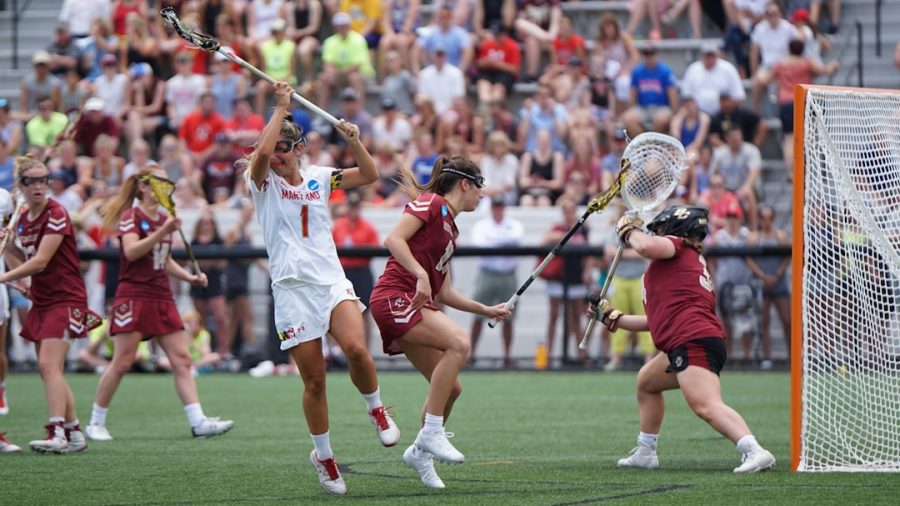
The NCAA tournament selection committee mistakes 2026 made are the same ones they’ve been making for years — and it’s time to name them. They’re evaluating dozens of programs across conferences with wildly different schedules and inconsistent strength of schedule metrics. Late-season chaos can flip a resume in a weekend. That complexity is real and it deserves acknowledgment.
It also doesn’t excuse getting it wrong. And this year, they got it wrong in five specific, identifiable ways that are worth naming — not to relitigate the bracket, but because these same mistakes will show up in 2027 if nobody calls them out now.
1. The At-Large Evaluation Has No Published Methodology and It Shows
Every spring there’s at least one team sitting on a legitimate tournament resume that doesn’t make the field, and a team with a weaker record against a softer schedule that does. This isn’t a perception problem — it’s a transparency problem. The committee has never published a clear weighting system for how it values head-to-head results, road record, strength of schedule, and late-season performance relative to each other.
Without that transparency, every at-large decision looks arbitrary because it effectively is arbitrary. “We looked at the full body of work” is not a methodology. It’s a placeholder for a methodology. When two teams have comparable records and the committee chooses one over the other without explaining why, they’re not doing a hard job well — they’re doing a hard job opaquely, which is not the same thing.
The fix is straightforward: publish the criteria and the weights before the season starts, then apply them consistently. Other sports do this. Lacrosse can too.
2. Conference Tournament Performance Is Treated Inconsistently
Winning your conference tournament means you get an automatic bid. Not winning it means your conference tournament run is treated as essentially irrelevant to your at-large case. That’s the binary the committee operates on, and it’s wrong.
A program that goes on a three-game run through a competitive conference tournament — beating ranked opponents, showing the kind of late-season form that correlates with tournament success — should see that reflected in their seeding. Instead, the committee treats conference tournament performance as either everything (automatic bid) or nothing (at-large resume). There’s no coherent reason for that gap. A deep conference tournament run against tournament-caliber opponents is exactly the kind of recent evidence that should influence seeding decisions. The committee ignores it.
3. Road Record Is Systematically Underweighted
Lacrosse has a regional scheduling structure that makes road wins harder to accumulate than in sports with more geographically distributed schedules. When a program goes 5-2 against ranked opponents away from home, that is an extremely meaningful data point about their quality. It’s harder to inflate than a home record, it comes against opponents who had every structural advantage, and it reflects the ability to execute when things aren’t comfortable.
The committee regularly seeds programs based on overall record in ways that flatten the difference between a team that earned their wins on the road and a team that padded their record at home. Road performance should be weighted explicitly and separately. Right now, at best it’s a tiebreaker. It should be a primary input.
4. First-Round Matchups Are Built for Convenience, Not Competition
The purpose of seeding is to reward regular-season and tournament performance by giving better programs favorable paths. That’s legitimate. The problem is when seeding creates first-round matchups that have no meaningful competitive tension — where one team has a realistic path to winning and the other is mathematically eliminated before the opening draw.
Those games matter to the programs playing them. The players on the lower-seeded team prepared for a season, won enough to get into the field, and deserve a first-round opponent that represents an actual contest. The committee has the flexibility to avoid the worst of these mismatches when building the bracket and doesn’t always use it. They should.
5. Power Conference Reputation Is Used as a Proxy for Actual Team Quality
This is the one that keeps coming back. Every year, a team from a power conference with a mediocre record gets seeded higher than a team from a mid-major conference with a better record because the committee implicitly treats conference reputation as a signal about team quality. It is not a signal about team quality. It is a signal about conference reputation.
The game results are the data. A mid-major program that goes 13-3 with wins over ranked opponents has produced more evidence of their quality than an ACC program that went 9-7 in a strong conference. The ACC program may have played harder games — strength of schedule is a legitimate input. But “they’re from a better conference” is not a legitimate input. That’s circular reasoning dressed up as bracket analysis.
Mid-major programs have been getting the short end of this calculation for years. The committee knows it. They keep doing it because the power conferences have institutional influence over the NCAA structure and nobody wants to have that conversation out loud. But it’s happening, it’s wrong, and it will happen again in 2027.
The NCAA Tournament Selection Committee Mistakes 2026 — What Has to Change
None of this requires eliminating the committee or blowing up the selection process. It requires three things: publish the methodology before the season, apply it consistently regardless of conference affiliation, and stop pretending conference reputation is a substitute for actual performance data. That’s not a high bar. The committee should clear it.