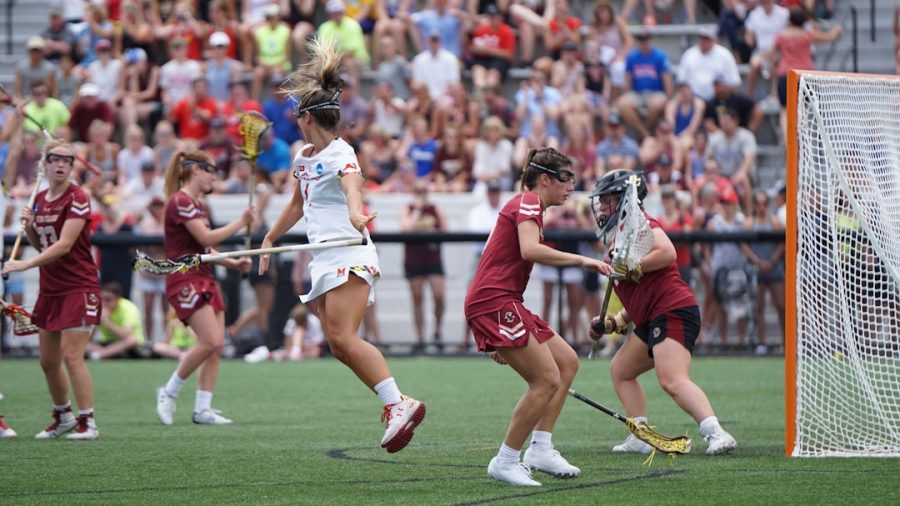
Charlotte North doesn’t need an introduction. She’s going to get one anyway, because the Women’s Lacrosse League just announced itself to the world, and the name at the top of the marquee belongs to the Boston Guard captain.
The WLL dropped on November 13, 2024 — Paul Rabil on ESPN Get Up, Lacrosse Sixes format, four teams, Olympic ambitions. It was the biggest news women’s lacrosse has had in years. And the moment people heard “Boston Guard,” one name came to mind immediately: Charlotte North.
The Resume Speaks for Itself
Multiple NCAA championships at Boston College. A list of individual accolades long enough to wallpaper a locker room. Nationally recognized not just as a great player, but as the player — the one opponents build defensive schemes around, the one whose presence changes how a game is played before the first whistle.
In a sport that has historically struggled to translate elite college careers into sustainable professional visibility, North is the rare exception. People who don’t follow lacrosse closely still know Charlotte North. That matters more than any single stat line.
She’s not just a great player who happened to go pro. She’s the kind of player a league gets built around.
What It Takes to Be a Franchise Face
There’s a difference between being the best player in a league and being its franchise player. LeBron James isn’t just the best basketball player — he’s the reason casual fans tune in. That’s the threshold North clears for the WLL.
She plays the kind of lacrosse that converts skeptics. Fast, physical, intelligent, and decisive. The Sixes format — six-on-six, built for speed and scoring — was essentially designed for players like her. North doesn’t need twenty-five minutes of setup to be dangerous. She’s dangerous on possession one.
Her teammates on the Guard are no slouches. But captaincy in a league’s inaugural season isn’t handed out as a participation trophy. The WLL put the armband on her for the same reason every organization wants a franchise cornerstone: identity, accountability, and the gravitational pull that keeps everyone else performing at their ceiling.
The Olympic Context Changes Everything
Lacrosse Sixes is on the 2028 LA Olympic program. Read that again. WLL players aren’t just competing for a championship — they’re auditioning for the biggest stage in global sport, and it’s happening in their backyard.
This reframes every single thing about what the WLL is trying to build. This isn’t a stop-gap professional league hoping to break even and maybe get a streaming deal. This is the pipeline to an Olympic gold medal. And Charlotte North is at the center of it.
If you’re a young girl playing lacrosse right now, North is the face you’re going to see on the screen when someone explains why this matters. The WLL couldn’t have scripted a better flagship player if they tried.
Why This Moment Is Different
Women’s professional lacrosse has had false starts before. Leagues that launched with good intentions and folded before anyone built a real habit of watching. The WLL is a wholly owned PLL subsidiary — it has the infrastructure, the broadcast relationships, and the institutional commitment that prior attempts lacked.
But infrastructure alone doesn’t fill seats or drive subscriptions. Stars do. Storylines do. Players who make you feel something do.
Charlotte North makes you feel something. She’s competitive in the way that reads through a screen. She’s good enough that even a casual viewer recognizes the gap between her and everyone else on the field in real time. And she’s at the beginning of what could be a career that runs right through the 2028 Olympics.
Women’s pro lacrosse has been waiting for its franchise player. She’s already been playing the part for years. The WLL just finally gave her the league to match.